
Fort Burgoyne
Features
Description
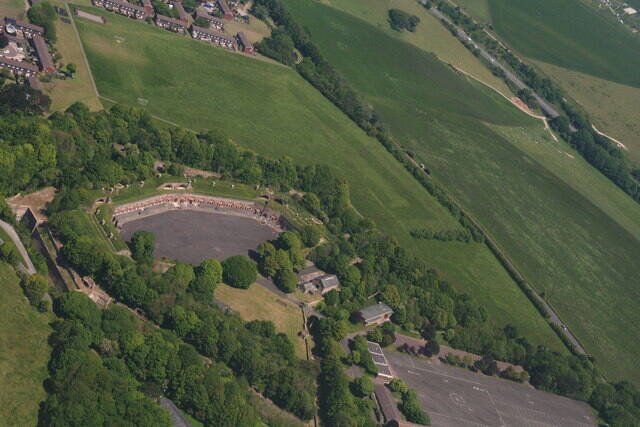
Fort Burgoyne is one of the finest examples of Victorian military engineering in Britain, a massive Palmerston fort built between 1861 and 1868 to protect Dover Castle and the vital port from potential French invasion.
Originally known as Castle Hill Fort, this polygonal fortress was constructed at the substantial cost of £88,053, featuring a 35-foot wide defensive ditch, multiple caponiers for flanking fire, and two detached wing batteries connected by ditched outworks creating a formidable defensive complex dominating the high ground northeast of Dover Castle.
The strategic defensive importance of Fort Burgoyne stemmed from its commanding position on elevated terrain overlooking both Dover Castle and Britain’s busiest ferry port. Victorian military planners recognised that the medieval castle, while impressive, was vulnerable to artillery bombardment from surrounding hills. Fort Burgoyne addressed this weakness by occupying the high ground, preventing enemy forces from establishing artillery positions that could dominate the castle and harbour below. The fort’s elevated gun platforms provided spectacular views across the Kent coast, Dover town, and the English Channel, enabling comprehensive surveillance of maritime approaches.
The fort’s architectural design demonstrates sophisticated Victorian military engineering. The polygonal layout with bastions at strategic angles maximised defensive firepower while the deep ditch surrounding the entire complex created formidable obstacles for attackers.
Double caponiers (a covered passage across a ditch round a fort) hidden within the ditch provided devastating flanking fire along the ditch floor, while single caponiers at corners and flanks ensured complete coverage. The fort originally mounted 35 guns on its main ramparts plus 26 smaller weapons in caponiers and batteries, with the East Wing Battery equipped with five guns and West Wing Battery with four, creating overwhelming firepower.
Military service spanned both World Wars, with Fort Burgoyne continuously adapted to meet evolving threats. During World War I, brick gun emplacements were constructed, while World War II saw concrete emplacements added for two batteries of 25-pounder field guns.
When German invasion threatened in 1940, Fort Burgoyne became one end of the South-East Command fortified Stop-line extending 34 kilometers between Dover and Whitstable, hastily reinforced with pillboxes, slit trenches, weapon pits, and spigot mortar emplacements designed to delay enemy forces advancing from invasion beaches toward London.
The Land Trust acquired Fort Burgoyne in 2014, investing over £2 million in conservation and stabilisation works transforming the deteriorating military relic into accessible community heritage space. While the main fort remains closed except for special events, the West Wing Battery opened to the public in 2023 following major conservation investment.
This beautifully restored space features the original gatehouse, gun shed, tool shed, and gun platform dating from the 1860s construction, brought alive by Emily Peasgood’s immersive sound installation ‘I Would Rather Walk With You’ combining archival soldier audio with bespoke choral recordings.
The wider 25-hectare estate including Coombe Hole Local Wildlife Site provides spectacular walking through rolling chalk grassland managed for nature conservation, while 7 hectares of recreation ground and woodland surround the fort offering glimpses into the defensive ditch and panoramic views across the Kent Downs AONB. The site supports diverse wildlife including common lizards, slow worms, and several important bat species, demonstrating how historic fortifications can become valuable ecological refuges.
An interesting historical fact involves Fort Burgoyne being named after Field Marshal Sir John Fox Burgoyne, Inspector-General of Fortifications, whose father John Burgoyne famously surrendered at Saratoga during the American Revolutionary War. Despite this family military embarrassment, the son became one of Victorian Britain’s most distinguished military engineers, overseeing the vast coastal defense programme that created fortifications like Fort Burgoyne across threatened invasion coasts.
Visitor Reviews from the Web
Positive reviews consistently praise Fort Burgoyne’s spectacular location with stunning views over Dover Castle, the town, and the English Channel. Visitors appreciate the West Wing Battery’s sensitive restoration and the immersive sound installation creating atmospheric historical interpretation.
The free guided tours offered during open days receive acclaim for knowledgeable volunteer guides whose passion brings Victorian military engineering alive. Many reviewers describe it as a hidden gem offering peaceful exploration without crowds.
The surrounding wildlife site and recreation grounds appeal to nature lovers and families seeking green space. Dog-friendly grounds receive positive mentions. The Land Trust’s conservation efforts and community engagement earn consistent praise for rescuing this important monument from dereliction.
Negative aspects mentioned include frustration that the main fort remains closed to the public except for special events, limiting access to the most impressive Victorian structures. The restricted West Wing Battery opening hours (Wednesday-Friday 10am-4pm) can make visiting challenging for those unable to attend during these times.
Limited parking with only a small layby on Dover Road causes difficulties during popular events. Some visitors note the narrow winding access roads through residential areas make navigation challenging.
The lack of comprehensive interpretation panels means historical context relies heavily on guided tours or prior research. Basic facilities with no on-site café or toilets (though improvements planned) disappoint some visitors. The fort’s deteriorated condition in areas not yet restored can seem disappointing to those expecting pristine Victorian military architecture throughout.
Frequently Asked Questions About Fort Burgoyne
What are Fort Burgoyne opening hours?
West Wing Battery: Wednesday-Friday 10am-4pm year-round. Main fort: closed except for special events including Heritage Open Days. The wider estate (Coombe Hole wildlife site and recreation ground): open daily for public access. Check thelandtrust.org.uk for special event dates and booking.
How much does Fort Burgoyne cost?
FREE admission to West Wing Battery and wider estate. Special guided tours during open days welcome donations supporting ongoing conservation. No formal admission charges, making this excellent value for exploring Victorian military architecture and surrounding nature reserve.
Can you go inside Fort Burgoyne main building?
No, the main fort remains closed to the public except during special events due to ongoing conservation requirements and structural condition. However, the restored West Wing Battery provides accessible Victorian military architecture experience with original structures including gatehouse, gun shed, and gun platform.
Is Fort Burgoyne suitable for families?
Yes, excellent for families with the wildlife site, recreation ground, and woodland providing safe outdoor space for children. The West Wing Battery offers historical interest while the surrounding nature areas allow exploration and play. Dog-friendly grounds welcome pets on leads.
Where can I park for Fort Burgoyne?
Limited parking available in a small layby on Dover Road. Additional parking at nearby Connaught Park or Dover town center car parks within walking distance. Bus routes 80A, 80B, 81, and 93 stop on Dover Road. National Cycle Network Route 2 passes the site.
What is the sound installation at Fort Burgoyne?
‘I Would Rather Walk With You’ by Emily Peasgood is an immersive audio installation in the West Wing Battery combining archival soldier recordings, bespoke choral music, and community-produced material. Funded by National Lottery Heritage Fund and Arts Council, it honours military history while celebrating the fort’s transformation into community space.
How long should I spend at Fort Burgoyne?
Plan 1-2 hours for West Wing Battery exploration and walks through the surrounding estate. Guided tours during special open days typically last 2 hours covering the fort’s history and architecture. Nature enthusiasts may spend longer exploring the 25-hectare Coombe Hole wildlife site.
Nearby Defence Heritage Sites of Interest
| Site Name | Type | Distance (miles) |
|---|---|---|
| Dover Castle | Medieval fortress with WWII tunnels and Cold War command centre | 1 |
| RAF Swingate (remains) | WWII radar and Cold War communications site | 2 |
| Deal Castle | Tudor concentric artillery fort | 3 |
| Walmer Castle | Tudor coastal artillery fort | 4 |
| Sandown Castle (remains) | Tudor artillery fort (ruined) | 5 |
| Richborough Roman Fort | Roman Saxon Shore fort and amphitheatre | 8 |
| RAF Manston History Museum | Aviation museum with Cold War and WWII exhibits | 14 |
| Spitfire & Hurricane Memorial Museum | WWII aviation museum | 14 |
| Ramsgate Tunnels | WWII civilian and military underground shelter | 15 |
| The Powell-Cotton Museum | Includes military ethnography and colonial history | 18 |
Image credit: Chris
Share
See on the Map
Contact Info
- fortburgoyne@dover.gov.uk
- thelandtrust.org.uk/space/fort-burgoyne
- Fort Burgoyne Road, Guston, Dover, Kent CT15 5LP, England