
Rye Castle
Features
Description
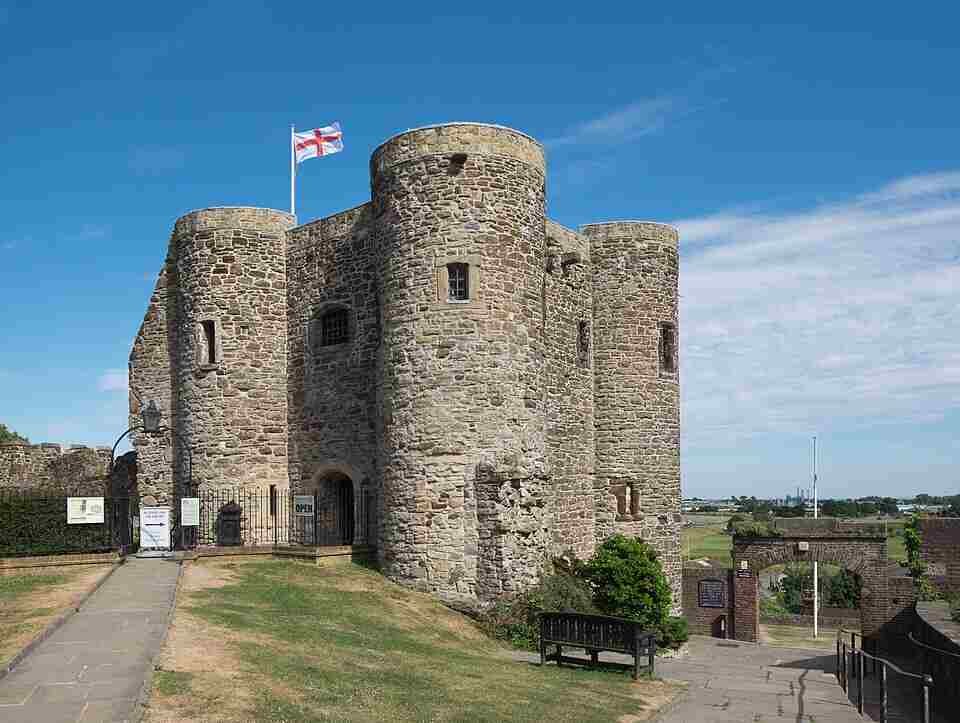
Rye Castle, also known as Ypres Tower, stands as a remarkably well-preserved medieval fortification dominating the picturesque hilltop town of Rye in East Sussex. Built in 1249 by order of King Henry III and constructed by Peter of Savoy, Constable of the Cinque Ports, this sturdy square tower with three-quarter round turrets was originally called Baddings Tower and served as the principal defensive structure protecting one of England’s most important medieval ports.
The strategic defensive importance of Rye Castle stemmed from the town’s vital role as a Cinque Port, part of the confederation of maritime towns that provided ships and men for English naval defence in exchange for significant trading privileges. Positioned on a rocky promontory overlooking the River Rother and approaches to the town, the castle commanded views across Romney Marsh and the Channel coast, enabling early detection of French raiders who repeatedly threatened this prosperous trading community throughout the medieval period.
The castle’s architectural design reflects 13th-century military engineering adapted to urban defence requirements. The quatrefoil plan tower, three stories high, incorporated living quarters, storage facilities, and defensive positions within a compact footprint. The original intention appears to have been constructing a larger castle complex similar to Hastings or Pevensey, but only the tower was completed, leaving it in splendid isolation as the primary fortification integrated with the town’s defensive walls.
Rye’s strategic importance made it a frequent target during Anglo-French conflicts. French forces attacked the town multiple occasions during the Hundred Years War, with devastating raids in 1377 and 1448 that saw much of the town burned. Despite the castle’s defensive presence, these attacks demonstrated the limitations of medieval fortifications against determined raiders who could strike quickly from the sea before adequate defenses could be mobilized.
The castle’s post-medieval history reflects changing social needs within the growing town. It served successively as a town hall, courthouse, and from the 16th century onwards as a prison for criminals, debtors, and French prisoners of war. The tower’s conversion to a prison added cells, exercise yards, and modifications that altered but preserved the medieval structure. Women prisoners held here in the 18th and 19th centuries included those convicted of witchcraft, smuggling, and various petty crimes, their stories now interpreted through museum displays.
The transformation into Rye Castle Museum began in 1891, making it one of England’s oldest purpose-built local museums. Today’s exhibitions encompass medieval Rye history, Cinque Ports maritime heritage, extensive displays on smuggling activities that made Rye notorious during the 18th century, military history, police and prison life, and coastal defence evolution. Interactive exhibits allow children to try longbows, handle replica weapons, and dress in period costumes, bringing history alive through hands-on engagement.
The Gun Garden surrounding the tower features an impressive collection of historic cannons representing various periods of coastal defence, while the tower top provides spectacular panoramic views across Rye’s medieval roofscape, the marshes, and distant coast. The museum’s ground floor houses a reconstructed women’s prison cell where visitors can experience conditions endured by female prisoners, complete with atmospheric audio interpretation.
The adjacent medieval garden, recreated using historical plant species and design principles, provides peaceful contrast to the military architecture while illustrating medieval horticultural practices. Educational programs include school visits, historical reenactments, and talks covering topics from medieval warfare to smuggling adventures that characterised Rye’s more lawless centuries.
An interesting historical fact involves the tower’s name change from Baddings Tower to Ypres Tower. The origin remains debated, but likely commemorates John de Ypres, a Flemish merchant who owned property in medieval Rye, demonstrating the international trading connections that made the town prosperous enough to warrant substantial defensive fortifications.
Frequently Asked Questions About Rye Castle
What are Rye Castle opening hours?
March 30-October 31: Daily 10:30am-5:00pm (last admission 4:30pm). November 1-March 29: Daily 10:30am-3:30pm (last admission 3:00pm). Open seven days a week throughout the year.
How much does Rye Castle cost?
Adult admission £5.00. Children under 16 free but must be accompanied by an adult. Excellent value considering the extensive exhibitions, interactive displays, and spectacular tower-top views across historic Rye and surrounding countryside.
Is Rye Castle the same as Ypres Tower?
Yes, Rye Castle and Ypres Tower are two names for the same building. Originally called Baddings Tower when built in 1249, it later became known as Ypres Tower, possibly after a medieval property owner named John de Ypres.
Can you climb Rye Castle tower?
Yes, visitors can climb to the top of the tower for spectacular panoramic views across Rye’s medieval roofscape, Romney Marsh, and the surrounding coastal landscape. The views reward the climb and demonstrate the tower’s strategic defensive positioning.
What can you see at Rye Castle Museum?
Extensive displays on medieval Rye history, Cinque Ports heritage, smuggling activities, maritime history, prison life, police history, and military defense. Interactive exhibits include trying longbows, handling replica weapons, dress-up costumes, and exploring a reconstructed prison cell.
Where can I park for Rye Castle?
No nearby parking at the castle due to its central hilltop location. Public car parks available in Rye town centre including Cinque Ports Street car park, all within walking distance. The picturesque walk through medieval streets enhances the castle visit experience.
Is Rye Castle suitable for families?
Yes, it’s an excellent family destination with interactive activities including longbow practice, weapon handling, period costumes, and engaging prison cell experience. Children enjoy the hands-on approach while learning about medieval life, smuggling, and local history through accessible interpretation.
Nearby Defence Heritage Sites of Interest
| Site Name | Type | Distance (miles) |
|---|---|---|
| Camber Castle (remains) | Tudor artillery fort (ruined) | 2 |
| Winchelsea Town Defences | Medieval town fortifications and earthworks | 3 |
| Rye Harbour Wartime Defences | WWII coastal pillboxes and anti-invasion sites | 4 |
| Battle Abbey | Fortified abbey and 1066 battlefield site | 10 |
| Pevensey Castle | Roman/Saxon shore fort and medieval castle | 17 |
| Kent Battle of Britain Museum | Aviation and military museum | 22 |
| Newhaven Fort | 19th/20th-century coastal fortification | 24 |
| Brenzett Aeronautical Museum | WWII aviation museum and crash recovery exhibits | 25 |
| Bodiam Castle | 14th-century moated defensive castle | 26 |
| Dungeness Coastal Defences | 20th-century coastal and Cold War installations | 28 |
Image credit: DeFacto
Share
See on the Map
Contact Info
- 01797 226728
- ryemuseum.co.uk/ypres-tower
- 3 East Street, Rye, East Sussex TN31 7JY, England