
RAF Swingate Down
Features
Description
RAF Swingate Down represents one of Britain’s most historically significant radar sites, where pioneering Chain Home early warning technology provided crucial intelligence during the Battle of Britain, detecting Luftwaffe formations before they crossed the French coast.
Built in 1937 as one of the first five Chain Home stations protecting approaches to London and the Thames Estuary, this clifftop facility overlooking Dover and the English Channel played a vital role in the Second World War that multiplied RAF Fighter Command’s effectiveness threefold, enabling Britain’s survival during its darkest hour.
World War I history at Swingate began when Charles Rolls established an aerodrome here in 1910, later developed as Dover (St. Margaret’s) Aerodrome in July 1913. On 8 August 1914, all four squadrons of the Royal Flying Corps departed Swingate bound for France to support the British Expeditionary Force, with 56 aircraft making the historic Channel crossing.
Throughout WWI, Swingate served as training centre and staging point for aircraft deploying to France, with pilots using car tyre inner tubes as improvised life preservers during Channel crossings. Today, three WWI hangar bases survive alongside a granite memorial erected in 1966 commemorating the RFC squadrons who flew from Swingate at the war’s outbreak.
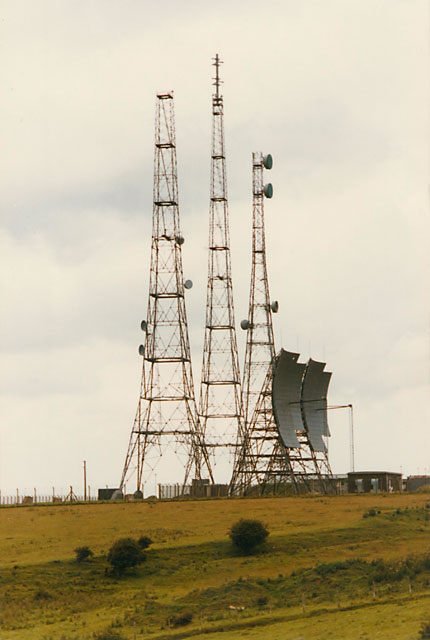
The strategic defensive importance of RAF Swingate stemmed from its commanding clifftop position providing unobstructed views across the Dover Strait. The Chain Home system at Swingate comprised four steel transmitting towers reaching 350 feet high plus four timber receiving towers forming the world’s first operational early warning radar network. This revolutionary technology detected enemy aircraft at ranges up to 100 miles, providing Fighter Command controllers 20-30 minutes warning to scramble interceptors.
The Luftwaffe bombed RAF Swingate on Adlertag (Eagle Day), 12-13 August 1940, during the opening phase of the Battle of Britain, targeting the radar towers after Hermann Goering observed them through binoculars from France. Subsequent raids failed to destroy the resilient installation. In 1944, Swingate received cathode-ray direction finding equipment for Operation Big Ben, detecting V-2 ballistic missile launches from occupied Europe.
An interesting historical fact involves the Graf Zeppelin intelligence mission of 1938. German electronic warfare specialists aboard the airship successfully detected transmissions from Chain Home stations but couldn’t analyse the signals’ purpose, dismissing radar as impractical for aircraft detection.
Visitor Reviews from the Web
Positive reviews from military history enthusiasts describe RAF Swingate as a fascinating site for those interested in radar development and Battle of Britain history. Visitors appreciate viewing the surviving towers from public footpaths along the Dover cliffs. Photography enthusiasts value capturing the towers against dramatic clifftop backdrops. The WWI memorial and hangar bases receive positive mentions from aviation heritage visitors.
Negative aspects dominate reviews due to very limited access. The site is NOT open to the public, located on private property used for broadcasting infrastructure. No visitor centre, interpretation panels, or organised tours exist. Visitors cannot approach the towers or enter any buildings. The lack of on-site interpretation means historical context requires extensive prior research. Some reviewers express disappointment that such a historically significant Battle of Britain location lacks heritage interpretation or public access arrangements.
Frequently Asked Questions About RAF Swingate Down
What are RAF Swingate Down opening hours?
The site is NOT open to the public and remains on private property used for broadcasting infrastructure. No organised tours, visitor facilities, or public access exists. The surviving towers can be viewed from public footpaths along Dover’s White Cliffs.
Can you visit RAF Swingate Down radar station?
No, the site is inaccessible to the public on private property. The two surviving Chain Home towers can be viewed from distance on public footpaths, but visitors cannot approach the towers or enter any buildings.
What remains of RAF Swingate today?
Two original Chain Home transmitting towers survive (364 feet/111 metres high), now stripped of wartime cantilever platforms and used for BBC broadcasting and telecommunications. Three WWI hangar bases and 1966 RFC memorial commemorate earlier aviation history.
Why was RAF Swingate important in Battle of Britain?
As one of the first Chain Home radar stations, Swingate detected Luftwaffe formations forming over France before crossing the Channel, providing 20-30 minutes warning enabling Fighter Command to position interceptors effectively.
Where can I see RAF Swingate towers?
Best views from public footpaths along Dover’s White Cliffs, particularly near Fan Bay Deep Shelter and South Foreland Lighthouse (both National Trust). The towers are prominent local landmarks visible from coastal paths and Dover Castle.
What was Operation Big Ben at Swingate?
In 1944, RAF Swingate received cathode-ray direction finding equipment as part of Operation Big Ben, detecting V-2 ballistic missile launches from occupied Europe providing early warning of incoming rockets.
Is there a museum about RAF Swingate radar?
No dedicated museum exists at Swingate. However, Dover Museum covers local WWII history including Chain Home radar. The Battle of Britain Memorial at Capel-le-Ferne interprets the wider Battle including radar’s crucial role.
Nearby Defence Heritage Sites of Interest
| Site Name | Type | Distance (miles) |
|---|---|---|
| Dover Castle | Medieval fortress with WWII tunnels and Cold War command centre | 1 |
| Fort Burgoyne | Victorian fortification with Napoleonic origins | 2 |
| Deal Castle | Tudor concentric artillery fort | 3 |
| Walmer Castle | Tudor coastal artillery fort | 4 |
| Sandown Castle (remains) | Tudor artillery fort (ruined) | 5 |
| Battle of Britain Memorial | National WWII aircrew memorial with replica aircraft | 6 |
| Richborough Roman Fort | Roman Saxon Shore fort and amphitheatre | 8 |
| RAF Manston History Museum | Aviation museum with Cold War and WWII exhibits | 14 |
| Spitfire & Hurricane Memorial Museum | WWII aviation museum | 14 |
| Ramsgate Tunnels | WWII civilian and military underground shelter | 15 |
| The Powell-Cotton Museum | Includes military ethnography and colonial history | 18 |
Image credit: Peter Facey
Share
See on the Map
Contact Info
- St. Margaret's at Cliffe, Dover, Kent CT15 6HP, England