
Kilravock Castle
Features
Description
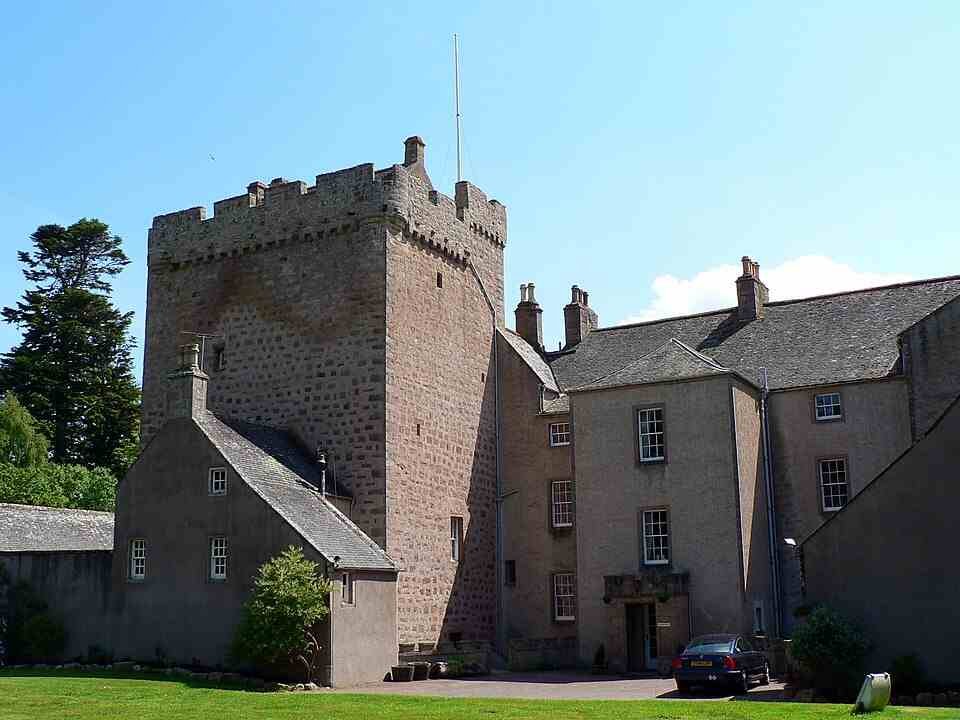
Kilravock Castle, pronounced ‘Kilrawk’, represents one of Scotland’s most authentic examples of continuous clan residence, having served as the seat of Clan Rose for over 560 years. Located near Croy between Inverness and Nairn, this remarkable fortress demonstrates the evolution of Highland defensive architecture from medieval tower house to family residence while maintaining its historical integrity and clan connections.
The castle’s strategic significance in Highland defence lies in its position controlling approaches to the Moray Firth region and access routes between Inverness and the northeastern Highlands. Begun around 1460, Kilravock Castle was constructed during a period of intense clan warfare when defensive capabilities were essential for survival and territorial control.
The original tower house exemplifies 15th-century Scottish defensive architecture, featuring massive stone walls, minimal windows, and a compact footprint designed for maximum defensive capability. The structure demonstrates how Highland builders adapted European castle design to local conditions, creating fortifications that could withstand both siege warfare and the harsh Scottish climate.
Architectural evolution at Kilravock reflects changing military needs and social expectations over five centuries. Later additions include a 17th-century extension and 18th-century modifications that transformed the fortress into a comfortable family residence while preserving its defensive core. This organic development creates a fascinating architectural timeline visible throughout the structure.
The Rose clan’s continuous occupation of Kilravock Castle provides unique insights into Highland family traditions and social structures. Unlike many Scottish castles that changed hands through conquest or political upheaval, Kilravock has remained within the same family, preserving authentic clan heritage and historical continuity rare in Scottish castle studies.
The castle’s defensive features include thick-walled construction, strategically positioned windows serving as arrow slits, and entrance arrangements designed to channel attackers into killing zones. The tower house design concentrated defensive capabilities within a compact structure that could be defended by a relatively small garrison during clan conflicts.
Historical significance extends beyond military considerations to encompass the castle’s role in Highland politics and social development. Kilravock served as a centre of Rose clan authority, hosting gatherings that determined territorial boundaries, resolved disputes, and organized military campaigns during turbulent periods of Highland history.
The name ‘Kilravock’ derives from the Scottish Gaelic ‘Cill Rathaig’, meaning ‘church at the small circular fort’, indicating the site’s religious and defensive significance predating the current castle. Archaeological evidence suggests earlier fortifications occupied this strategic location, demonstrating its long-term military importance.
Highland clan culture is preserved authentically at Kilravock through family traditions, clan gatherings, and cultural events that maintain connections between the castle and the broader Rose clan diaspora. These activities demonstrate how Highland castles served not just as residences but as cultural centres preserving clan identity and traditions.
The castle’s library and archives contain extensive clan records, historical documents, and genealogical materials spanning centuries of Highland history. These collections provide invaluable insights into clan politics, land management, and social structures that shaped Highland society before modern political systems transformed the region.
Interior furnishings and artifacts at Kilravock reflect centuries of continuous family occupation, with period furniture, clan portraits, and historical weapons creating an authentic Highland castle atmosphere. Unlike museum displays, these items remain in their historical context, providing genuine insight into Highland noble lifestyle.
The castle’s role during the Jacobite period illustrates the complex political loyalties that divided Highland clans. The Rose clan’s positions during various uprisings demonstrate how individual families navigated competing loyalties between clan traditions and political pragmatism during turbulent times.
An interesting historical fact about Kilravock involves its connection to Bonnie Prince Charlie, who stayed at the castle before the Battle of Culloden. The morning after his visit, he was reportedly served breakfast by Rose clan members who would later fight against him in the battle, illustrating the complex relationships that characterised Highland politics.
Modern conservation efforts at Kilravock balance historical preservation with practical family residence needs. The castle continues to serve as a private home while offering limited public access, maintaining the authentic atmosphere that distinguishes it from purely commercial tourist attractions.
The surrounding estate demonstrates traditional Highland land management practices, including forestry, agriculture, and wildlife conservation that have sustained the property for centuries. These activities illustrate how Highland castles operated as centres of economic activity beyond their military and residential functions.
For heritage researchers and clan historians, Kilravock Castle represents an unparalleled resource for understanding authentic Highland life and clan culture. Its continuous family occupation and extensive archives provide insights unavailable at other Scottish castles, making it invaluable for academic study and cultural preservation.
The castle’s limited public access through private tours and special events maintains its authentic character while allowing visitors to experience genuine Highland castle life. This approach preserves the property’s historical integrity while sharing its remarkable heritage with interested visitors and clan members worldwide.
Kilravock Castle FAQs
1. Is Kilravock Castle open to the public?
No. Kilravock Castle is privately owned and managed by the Kilravock Castle Christian Trust, and it is not open for general public visits. There are no regular guided tours or daily admissions. If you’re planning a special group visit, media project, or academic research, you can enquire by emailing info@kilravock.com for availability and access arrangements.
2. What is the history of Kilravock Castle?
Kilravock Castle dates from around 1460 and has been the ancestral seat of the Clan Rose since the late 13th century. Over its 550-year history, the castle hosted Mary, Queen of Scots in 1562, Prince Charles Edward Stuart in 1746, and poet Robert Burns in 1787. It combines a 15th-century tower house with later 17th- and 18th-century additions and is protected as a Category A listed building reflecting its architectural and cultural significance.
3. Where is Kilravock Castle located and how do I get there?
Kilravock Castle stands near the village of Croy, between Inverness and Nairn in the Highland council area of Scotland. It’s accessible by car via the B9090, about a 15-minute drive east of Inverness airport and less than 10 miles from Inverness city centre. The nearest train stations are Inverness and Nairn—car hire or a taxi from either station is the most convenient way to reach the castle grounds.
4. Can I host private events or weddings at Kilravock Castle?
Yes, Kilravock Castle sometimes hosts private events, small weddings, photo shoots, and corporate retreats under the stewardship of the Christian Trust, though this may have changed as the castle was put up for sale in 2023. Spaces include the historic tower rooms and surrounding gardens. Availability is limited, so you should contact the Trust directly at info@kilravock.com with your event date, guest numbers, and requirements to discuss rates, catering options, and site logistics.
5. Can I get a view of Kilravock Castle?
Although Kilravock Castle is not open for general tours, you can admire its 15th-century tower house and courtyard from several public vantage points. The B9090 road running past the estate offers clear views of the castle’s north façade and its formal gardens. Nearby walking trails through Rodhill Wood and the approach lanes to Croy also reveal glimpses of its battlements set against rolling Highland fields. For the most dramatic light and shadows on the sandstone walls, plan your visit at sunrise or sunset. Drone flights over the property are prohibited without explicit permission from the Kilravock Castle Christian Trust.
Nearby Defence Heritage Sites of Interest
| Site Name | Type | Distance (miles) |
|---|---|---|
| Nairn Castle | Medieval castle ruins | 8 |
| Inverness Castle | 19th-century castle | 9 |
| Cawdor Castle | Medieval tower house | 11 |
| Fort George | 18th-century coastal artillery fort | 15 |
| Urquhart Castle | Medieval lakeside fortress | 19 |
| Brodie Castle | 16th-century tower house | 21 |
| RAF Lossiemouth Aviation Museum | Military aviation museum | 25 |
Image credit: Wojsyl
Share
See on the Map
Contact Info
- +44 1667 493258
- www.kilravockcastle.com
- Kilravock Castle, Croy, Inverness IV2 5PQ, Scotland