
Dungeness Wartime Coastal Defence, Kent
Features
Description
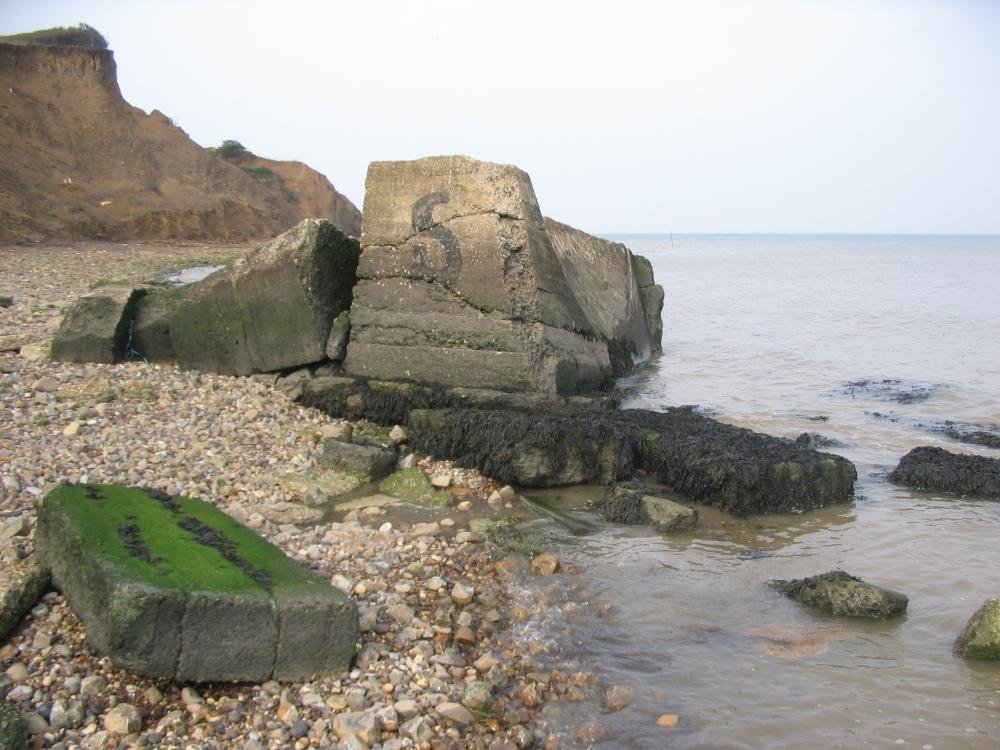
Dungeness wartime coastal defences represent one of Britain’s most extraordinary collections of 20th-century military architecture, combining the dramatic Denge Sound Mirrors with extensive World War II pillboxes, anti-tank obstacles, and defensive positions that transformed the vulnerable Romney Marsh coastline into a fortified bulwark against German invasion.
The spectacular acoustic mirrors, built in the late 1920s and early 1930s as experimental early warning systems, stand as haunting monuments to pre-radar technology, while scattered concrete pillboxes demonstrate the desperate preparations undertaken when Britain stood alone against Nazi aggression in 1940.
The strategic defensive importance of Dungeness and Romney Marsh stemmed from their vulnerability to invasion. The close proximity to continental Europe, flat shores, easily accessible beaches, and wide hinterland made this coast one of Britain’s most threatened sections during World War II. German forces occupying France could launch invasion barges across the narrow English Channel, with Romney Marsh providing ideal terrain for rapid inland advance toward London. This geographical reality demanded comprehensive defensive preparations transforming peaceful coastal landscape into militarized frontier bristling with fortifications.
The Denge Sound Mirrors, known colloquially as ‘listening ears,’ comprise three massive concrete parabolic reflectors designed to detect incoming enemy aircraft through amplified sound waves. The largest mirror, standing 30 feet high and 200 feet long, represents the pinnacle of acoustic early warning technology developed by RAF research during the interwar period. Operators using stethoscope-like devices could theoretically detect aircraft engines at distances up to 20 miles, providing crucial minutes of warning before visual sighting became possible.
The acoustic mirror technology employed sophisticated understanding of sound propagation and reflection. The curved concrete surfaces focused sound waves onto microphones positioned at the parabolic focus point, amplifying distant aircraft engine noise sufficiently for human detection.
Multiple mirrors of varying sizes tested different configurations, with the massive 200-foot curved wall mirror representing the final evolutionary stage before radar technology rendered acoustic detection obsolete. These experimental structures, built between 1928 and 1930, became operational too late to prove their worth before electronic detection superseded them.
World War II defensive preparations added extensive pillbox networks, anti-tank obstacles, barbed wire entanglements, and minefields transforming Romney Marsh into a heavily fortified defensive zone. Concrete pillboxes of various types including hexagonal Type 22, rectangular Type 24, and specialised designs dotted the coastline and inland defensive lines. These small fortified structures housed machine gun positions, anti-tank weapons, and observation posts creating interlocking fields of fire designed to channel and destroy German invasion forces.
The Romney Marsh defensive system incorporated flooding capabilities, with prepared demolition charges ready to breach sea walls and inundate low-lying areas, creating impassable obstacles for German tanks and infantry. Advanced Landing Grounds built for Allied fighters and PLUTO (Pipe-Line Under The Ocean) operations supporting D-Day landings demonstrated how defensive preparations evolved into offensive capabilities as Allied fortunes improved. The landscape still bears witness to this intensive militarisation through surviving structures scattered across the marsh.
The unique Dungeness landscape, dominated by Britain’s largest shingle headland and the stark nuclear power station, provides dramatic backdrop for exploring these military relics.
Contemporary interest in these defensive structures reflects growing appreciation for 20th-century military heritage and the stories of ordinary people who prepared Britain’s last-ditch defences during the nation’s darkest hour. The pillboxes, though often weathered and graffitied, represent tangible connections to the courage and determination that characterized British resistance when invasion seemed imminent.
An interesting historical fact involves the sound mirrors’ influence on post-war architecture and art. Their brutalist concrete forms and parabolic geometry inspired artists and architects who recognized the accidental sculptural beauty of these functional military structures. The mirrors have appeared in music videos, films, and contemporary art installations, demonstrating how obsolete military technology can achieve cultural significance transcending original defensive purposes.
Visitor Reviews from the Web
Positive reviews consistently describe the Denge Sound Mirrors as fascinating and atmospheric historical structures that capture imaginations with their scale and unusual purpose. Visitors appreciate the dramatic coastal setting and the opportunity to see these rare examples of pre-radar early warning technology.
Photography enthusiasts praise the sculptural qualities and striking visual impact of the concrete mirrors against the stark Dungeness landscape. History buffs value the educational significance demonstrating technological evolution from acoustic to electronic detection systems. Many reviewers describe visits as unique experiences offering insights into Britain’s defensive preparations during anxious interwar and wartime periods. The remote location and occasional access add to the sense of discovery.
Negative aspects mentioned frequently include very limited public access, with the sound mirrors located on private land requiring permission or attendance at infrequent open days organized by heritage groups. Some visitors express frustration at traveling to the area only to find the site inaccessible.
The pillboxes scattered across Romney Marsh are often in poor condition, with graffiti, structural decay, and dangerous interiors limiting safe exploration. No dedicated visitor center or interpretive facilities exist at most sites, requiring visitors to research independently for historical context. The remote Dungeness location means limited amenities and facilities. Some reviewers note disappointment that the sound mirrors are essentially concrete ruins rather than working exhibits with interactive demonstrations. Weather exposure on the windswept coast can make visits uncomfortable during poor conditions.
Frequently Asked Questions About Dungeness Wartime Coastal Defences
What are Dungeness wartime coastal defences opening hours?
Most World War II pillboxes are visible from public areas year-round but many are on private land or in dangerous condition. The Denge Sound Mirrors are on private land with very restricted access. Occasional open days are organized by groups like the Romney Marsh Countryside Partnership. Check heritage websites for scheduled access dates. Further details here.
How much does it cost to visit Dungeness coastal defences?
The pillboxes visible from public roads and paths are free to view externally. Sound Mirror open days typically charge modest admission fees when organized. General exploration of Romney Marsh coastal defences is free, though respect private property and safety warnings around deteriorating structures.
Can you visit the Denge Sound Mirrors?
Access is very restricted as the sound mirrors are on private land. Occasional organised open days provide guided access, typically a few times per year. Check the Romney Marsh Countryside Partnership or local heritage groups for scheduled visits. The structures can be viewed from a distance from public footpaths.
What are the sound mirrors at Dungeness?
Massive concrete parabolic reflectors built 1928-1930 as experimental early warning systems detecting incoming aircraft through amplified sound. The largest is 200 feet long. They represent pre-radar technology and became obsolete with radar development but remain as scheduled ancient monuments.
Are Dungeness coastal defences suitable for families?
Yes for general exploration with appropriate supervision. Many pillboxes are dangerous with unstable structures and concealed hazards. Children must be closely supervised. The remote landscape and scattered nature of defences requires good planning. Sound Mirror open days provide safe, guided family-friendly access when available.
Where can I park to see Dungeness defences?
Limited parking at Dungeness village, RSPB nature reserve, and various points along Romney Marsh roads. The defences are scattered across wide area requiring car travel between sites. Respect private land and use designated parking areas. Some pillboxes accessible from coastal paths and minor roads with roadside parking.
How long should I spend exploring Dungeness defences?
A comprehensive tour exploring multiple pillbox sites and the wider Romney Marsh defensive landscape could occupy a full day. Sound Mirror open days typically last 2-3 hours. Individual pillbox sites require just minutes to view externally. Combine with other Dungeness attractions including the lighthouse, nature reserve, and unique landscape for rewarding full-day visit.
Nearby Defence Heritage Sites of Interest
| Site Name | Type | Distance (miles) |
|---|---|---|
| Brenzett Aeronautical Museum | WWII aviation museum and dispersal hut | 5 |
| Rye Harbour Wartime Defences | WWII coastal pillboxes and anti-invasion sites | 10 |
| Camber Castle (remains) | Tudor artillery fort (ruined) | 11 |
| Rye Castle Museum | Medieval town castle and maritime defences | 12 |
| Winchelsea Town Defences | Medieval town fortifications and earthworks | 13 |
| Dymchurch Redoubt | Napoleonic coastal fortification | 17 |
| Pevensey Castle | Roman/Saxon shore fort and medieval castle | 26 |
| Kent Battle of Britain Museum | Aviation and military museum | 27 |
| Battle Abbey | Fortified abbey and 1066 battlefield site | 28 |
| Newhaven Fort | 19th/20th-century coastal fortification | 30 |
Share
See on the Map
Contact Info
- Dungeness Road, Dungeness, Romney Marsh, Kent TN29 9NB, England