
Corfe Castle
Features
Description
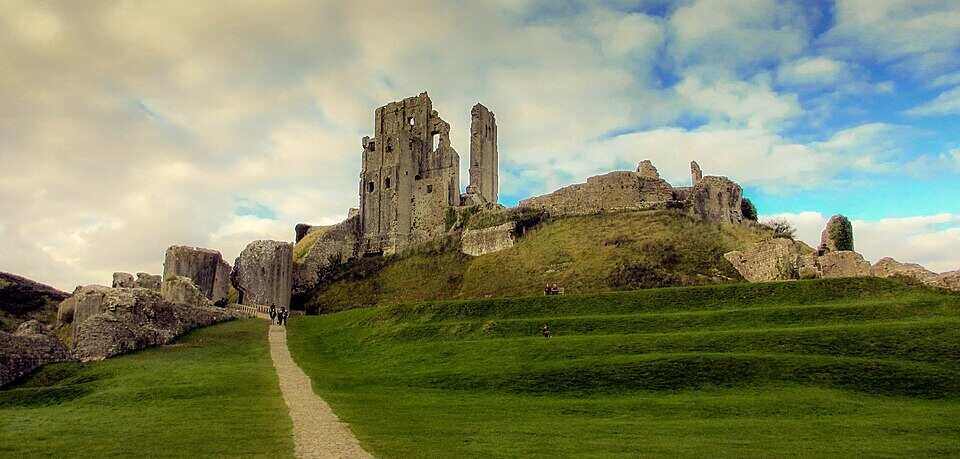
Corfe Castle stands as one of Britain’s most iconic and evocative survivors of the English Civil War, its dramatic ruins rising majestically from the Purbeck Hills in Dorset. These romantic ruins, partially demolished in 1646 by the Parliamentarians, represent nearly 1,000 years of turbulent history as both royal palace and impregnable fortress, making it one of England’s most atmospheric and historically significant castle sites.
Constructed under William the Conqueror in the 11th century, the castle overlooks a gap in the Purbeck Hills on the route between Wareham and Swanage. Its initial phase was among the earliest English castles to use stone in part, at a time when most were of earth and timber. Significant structural alterations were made during the 12th and 13th centuries.
Corfe Castle was positioned to control the vital gap through the Purbeck Hills that provided the only practical route across this limestone ridge. This natural chokepoint made the castle absolutely crucial for controlling movement between the Dorset coast and inland regions, while its elevated position on a steep-sided mound offered commanding views across the surrounding countryside.
The castle’s architectural evolution spans centuries, from its origins as a Saxon royal residence through Norman reconstruction to medieval fortress. Built primarily from distinctive grey-green Purbeck stone, the castle achieved remarkable defensive strength with walls up to 20 feet thick and a towering keep rising over 70 feet above the hilltop. Archaeological evidence reveals continuous occupation and fortification from at least the 9th century.
Historical significance reaches its pinnacle during the English Civil War when Lady Mary Bankes led one of the most heroic defences in British military history. Defending the castle during two separate sieges while her husband served King Charles I, Lady Mary and her small garrison of daughters, maids, and loyal retainers held out against overwhelming Parliamentary forces. Her courage and tactical skill transformed Corfe into a symbol of Royalist resistance.
The 1643 siege saw Lady Mary successfully repel 500-600 Parliamentary troops through ingenious defensive tactics including dropping stones and hot embers from the battlements. The garrison killed and wounded over 100 attackers before Parliamentary forces retreated, demonstrating how determined defenders could overcome numerical disadvantage through superior defensive positioning and unwavering resolve.
The castle’s final fall in 1646 came through treachery rather than military defeat, when one of Lady Mary’s trusted soldiers smuggled Parliamentary forces inside. This betrayal ended the castle’s military career but began its transformation into one of England’s most romantic ruins. Parliament ordered the castle ‘slighted’ – deliberately destroyed – to prevent future military use.
The systematic destruction that followed created the dramatic ruins visible today, with massive walls and towers deliberately toppled but not completely demolished. These spectacular remains demonstrate both medieval engineering excellence and the devastating effectiveness of Civil War siege warfare. The partially collapsed structures create dramatic silhouettes against the Dorset sky that have inspired artists and writers for centuries.
Modern conservation by the National Trust preserves these evocative ruins while providing safe access for exploration. Visitors can climb ancient staircases, explore murder holes, count arrow loops, and imagine the drama of medieval court life and Civil War sieges. Interactive quests and family activities bring history to life for younger visitors while maintaining the site’s atmospheric authenticity.
An interesting historical fact involves the castle’s connection to the murder of King Edward the Martyr in 978 AD, making it one of the earliest recorded royal assassination sites in English history. This violent beginning established a pattern of political intrigue and conflict that continued throughout the castle’s active military career.
Frequently Asked Questions About Corfe Castle
What are Corfe Castle opening hours?
Open daily 10am-4pm year-round except Christmas Day, Boxing Day, and 7th March. Last entry 3:30pm. Opening hours may vary during winter months or extreme weather conditions, so check the National Trust website before visiting.
How much does Corfe Castle cost?
National Trust members enjoy free entry. Non-members pay varying seasonal rates with adult tickets typically £13-15, children reduced rates, family tickets available. Online booking often provides discounts and guaranteed entry.
Can children visit Corfe Castle safely?
Yes, Corfe Castle offers excellent family exploration with quest activities and interactive exhibits. However, parents should supervise carefully around uneven medieval stonework, steep drops, and partially collapsed walls throughout the extensive ruins.
How long should I spend at Corfe Castle?
Plan 2-3 hours minimum for comprehensive exploration. The extensive ruins, spectacular views, and historical significance reward detailed investigation. Family quest activities may extend visit duration for those with children.
Is there parking at Corfe Castle?
National Trust car parks available in Corfe Castle village, though spaces can be limited during peak periods. Advance booking recommended for guaranteed parking. The castle is within easy walking distance of village amenities and railway station.
What can you see at Corfe Castle?
Explore the Great Hall remains, royal apartments, defensive walls, gatehouse ruins, and spectacular keep. Murder holes, arrow loops, and fallen masonry dramatically illustrate both medieval fortress life and Civil War destruction throughout the site.
Are dogs allowed at Corfe Castle?
Dogs on leads welcome throughout the castle grounds and ruins. Water bowls provided at various locations. The extensive site offers excellent walking opportunities for dogs while their owners explore this historic fortress.
Defence Heritage Sites Nearby
| Site Name | Type | Distance |
|---|---|---|
| The Rings (Corfe) | Medieval Fort | 0.5 miles |
| Wareham Town Walls | Saxon Defences | 6 miles |
| Portland Castle | Tudor Artillery Fort | 12 miles |
| Sandsfoot Castle | Tudor Artillery Fort | 12 miles |
| Nothe Fort | Victorian Coastal Fort | 14 miles |
| Brownsea Island | WWII Defensive Site | 16 miles |
| Sherborne Old Castle | Norman Castle | 20 miles |
| Sherborne Castle | Tudor Mansion/Fort | 20 miles |
| Highcliffe Castle | 19th Century Castle | 22 miles |
| Maiden Castle | Iron Age Hillfort | 22 miles |
| Christchurch Castle | Norman Motte & Bailey | 24 miles |
| Fleet Air Arm Museum | Aviation Museum | 28 miles |
| Hurst Castle | Tudor Artillery Fort | 30 miles |
Image credit: Tallguyuk
Share
See on the Map
Contact Info
- 01929 481294
- corfecastle@nationaltrust.org.uk
- www.nationaltrust.org.uk/visit/dorset/corfe-castle
- The Square, Corfe Castle, Wareham BH20 5EZ, Dorset, England