
Trematon Castle
Features
Description
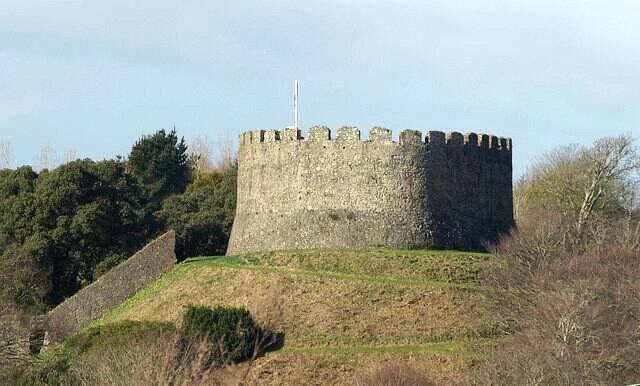
Trematon Castle represents one of Cornwall’s most significant Norman strongholds, strategically positioned to control the River Lynher and approaches to the Tamar estuary. Built shortly after the Norman Conquest, this formidable motte-and-bailey castle demonstrates early Norman military architecture while serving as a powerful symbol of conquest over the ancient Cornish kingdom.
The defensive importance of Trematon Castle lay in its control over vital water routes between Cornwall and Devon. Positioned on elevated ground overlooking the River Lynher, the castle commanded shipping movements and overland approaches to the Tamar crossing. This strategic location made it essential for Norman control over Cornwall’s eastern approaches and subsequent administrative authority.
Construction began around 1070 under Reginald de Valletort, one of William the Conqueror’s trusted lieutenants. The Normans arrived in Cornwall in 1070, around four years after seeing off the English at Hastings. Once here, they threw up a handful of their trademark castles, probably at first wooden structures on top of a raised piece of ground a motte overlooking an enclosed courtyard or bailey.
The castle’s motte-and-bailey design exemplifies early Norman fortification techniques adapted to Cornish terrain. The substantial artificial mound, standing approximately 50 feet high, supported a wooden then stone keep, while the bailey provided space for garrison buildings, stables, and workshops. This layout maximized defensive capabilities while accommodating administrative functions.
Archaeological investigations have revealed evidence of the castle’s evolution from timber to stone construction. The transition reflects growing Norman confidence in their control over Cornwall and increased investment in permanent fortifications. Stone walls replaced wooden palisades, creating the substantial ruins visible today.
The castle served as the administrative centre for the Honour of Trematon, one of Cornwall’s major Norman lordships. This extensive territory included numerous parishes and generated significant revenue through land rents, court fees, and trading privileges. The castle’s role extended beyond military defence to encompass judicial and economic authority.
Medieval records document Trematon castle’s involvement in various political conflicts, including the Baronial Wars and later medieval disputes. The fortress provided refuge for rebellious nobles and served as a base for military operations throughout Cornwall. Its strategic position made it valuable to successive generations of medieval lords.
The castle’s architectural features demonstrate sophisticated military engineering adapted to local conditions. Surviving earthworks show complex defensive arrangements including multiple baileys, ditches, and ramparts designed to channel attackers into killing zones. These features illustrate how Norman builders integrated continental expertise with Cornish geography.
During the English Civil War, Trematon Castle supported the Royalist cause, serving as a stronghold for King Charles I’s supporters in Cornwall. Parliamentary forces eventually captured and partially demolished the castle to prevent future military use. This destruction marked the end of the castle’s active military career.
An interesting historical fact involves the castle’s connection to the Duchy of Cornwall. As part of the Duchy estates, Trematon Castle remained crown property for centuries, connecting it to the Prince of Wales’s territorial holdings. This association demonstrates the castle’s continued constitutional significance beyond its medieval military role.
Modern conservation efforts focus on preserving the substantial earthwork remains and interpreting the site’s archaeological significance. Recent studies have enhanced understanding of the castle’s construction phases and revealed details about daily life within this important Norman stronghold.
Frequently Asked Questions About Trematon Castle
Can you visit Trematon Castle?
Trematon Castle remains privately owned with limited public access. The castle grounds are generally not open for regular tourist visits, though the exterior can be viewed from nearby public footpaths and roads.
What remains of Trematon Castle today?
Substantial earthworks including the impressive motte, bailey outlines, and defensive ditches survive. Some stone foundations and wall fragments provide evidence of the medieval buildings, though much of the superstructure has been lost.
Who built Trematon Castle?
Reginald de Valletort constructed Trematon Castle around 1070 as part of the Norman conquest of Cornwall. The castle was built to establish Norman authority and control strategic routes into Cornwall.
Why was Trematon Castle important?
The castle controlled the River Lynher and approaches to the Tamar estuary, making it crucial for defending Cornwall’s eastern borders. It served as administrative centre for the Honour of Trematon and remained strategically important throughout the medieval period.
Is Trematon Castle English Heritage?
No, Trematon Castle is privately owned and not managed by English Heritage. Access is restricted, though the site’s historical importance is recognized through its scheduled monument status.
What happened to Trematon Castle?
The castle declined after the medieval period and suffered partial demolition during the English Civil War. Later use as a residence and agricultural buildings further altered the medieval structure.
How do I get to Trematon Castle?
The castle is located near Saltash in Cornwall, accessible by road from the A38. Limited parking is available nearby, and the exterior can be viewed from public areas, though interior access is restricted.
Nearby Defence Heritage Sites of Interest
| Site Name | Type | Distance (miles) |
|---|---|---|
| Tregantle Fort | 19th-century coastal defence fort | 4 |
| Rame Head Battery | 19th-century coastal artillery battery | 6 |
| Fort Picklecombe | 19th-century coastal artillery fort | 8 |
| Launceston Castle | Norman motte-and-bailey castle | 17 |
| Polruan Old Battery | 19th-century coastal artillery battery | 19 |
| Restormel Castle | 13th-century shell-keep castle ruin | 20 |
| Tintagel Castle | Medieval coastal castle ruins | 28 |
Image credit: Derek Harper
Share
See on the Map
Contact Info
- Trematon, Saltash PL12 4RZ, Cornwall