
Rochester Castle
Features
Description
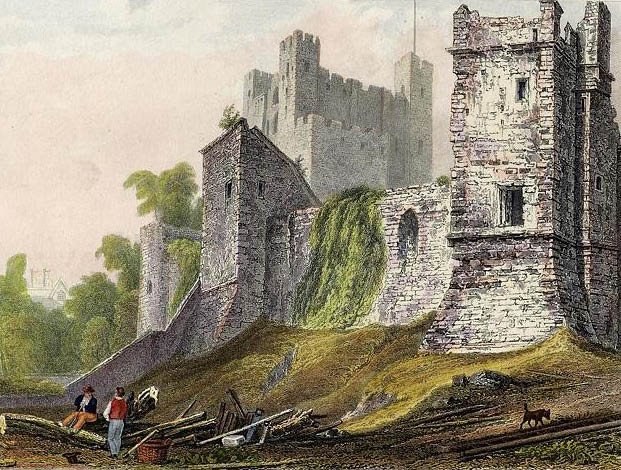
Rochester Castle stands as one of England’s finest examples of Norman military architecture, dominating the Medway valley from its strategic position overlooking the ancient crossing point of Watling Street. Built in the 1080s, Rochester castle is one of the oldest and tallest fortresses in England, featuring the tallest Norman keep to survive in Europe, constructed as a masterpiece of medieval architecture.
The strategic defensive importance of Rochester Castle cannot be overstated. Strategically placed astride the London Road, guarding an important crossing of the River Medway, the fortress controlled vital communications between London and the Channel ports. Situated at the junction of the River Medway and Watling Street, this location was of tactical importance, making it essential for Norman control over southeastern England.
In 1127 Henry I entrusted it to the Archbishop of Canterbury, who began to build the great keep, establishing ecclesiastical control over this crucial military installation. The massive stone keep, rising 125 feet above the Medway, demonstrates the pinnacle of 12th-century military engineering with walls up to 12 feet thick and sophisticated defensive arrangements throughout its four floors.
The castle’s architectural design exemplifies Norman fortress innovation, incorporating lessons learned from continental military engineering. The rectangular keep features distinctive cross-wall construction that divided the interior while strengthening the overall structure. This design provided multiple defensive positions within the keep while creating separate residential and administrative areas for the garrison and noble occupants.
The castle endured three sieges, including a famous assault by King John in 1215, when rebellious barons occupied Rochester in defiance of royal authority. The siege of Rochester Castle took place in 1215, shortly after Magna Carta had been signed by King John at Runnymede, highlighting the castle’s role in constitutional conflicts that shaped English governance.
The 1215 siege became legendary for King John’s innovative siege techniques, including the famous undermining operation that brought down the keep’s southeastern corner tower. The attackers used fire and reportedly fat from 40 pigs to weaken the tunnel props, causing spectacular collapse that finally breached the fortress. This event demonstrates both the castle’s formidable defences and the evolving nature of medieval siege warfare.
Its historical significance lies in its role as a strategic fortification in the conflict between early medieval kings and nobility. Facing the equally imposing medieval Rochester Cathedral, it also remains a potent representation of secular versus ecclesiastical power. This physical confrontation between castle and cathedral symbolizes the broader political struggles that defined medieval England.
The castle’s later history includes restoration work following siege damage and adaptation to changing military requirements. The destroyed corner tower was rebuilt in a cylindrical form rather than the original rectangular design, reflecting advances in fortification theory. These modifications demonstrate how medieval castles evolved to address new threats and technological developments.
An interesting historical fact involves the castle’s construction incorporating existing Roman walls and foundations. The Norman builders pragmatically reused Roman materials and defensive positions, creating a fortress that literally built upon centuries of strategic military occupation at this vital river crossing.
Frequently Asked Questions About Rochester Castle
What are Rochester Castle opening hours?
Tuesday – Sunday, between 10am and 6pm, with last admission 45 minutes before closing. Closed Mondays, except on Bank Holiday Mondays. Seasonal variations apply with earlier closing times during winter months.
Can you climb Rochester Castle keep?
Yes, visitors can climb the spiral staircases to explore all four floors of the keep and reach the battlements for spectacular views across the Medway valley and surrounding Kent countryside.
Is Rochester Castle suitable for children?
Yes, children enjoy exploring the massive keep and learning about medieval castle life. However, supervise carefully on spiral staircases and battlements. Interactive exhibits help younger visitors understand castle history and daily life.
How long should I spend at Rochester Castle?
Plan 1-2 hours for a comprehensive visit including climbing the keep and exploring the grounds. The castle combines well with visiting nearby Rochester Cathedral and the historic town center.
Are dogs allowed at Rochester Castle?
Dogs on leads are welcome in the grounds only. Assistance dogs welcome across the site. Dogs cannot enter the keep building due to narrow medieval staircases and safety considerations.
Where can I park for Rochester Castle?
Public car parks available in Rochester town centre within walking distance. The castle is easily accessible from Rochester High Street and combines well with exploring the historic town and shopping areas.
Nearby Defence Heritage Sites of Interest
| Site Name | Type | Distance (miles) |
|---|---|---|
| Fort Amherst | Napoleonic Victorian coastal fort | 2 |
| Upnor Castle | Tudor riverside artillery fort | 3 |
| Chatham Historic Dockyard | Naval dockyard and maritime military museum | 3 |
| Cooling Castle | Medieval castle with defensive earthworks | 8 |
| Leeds Castle | Medieval castle and fortified manor | 18 |
| Hever Castle | Tudor medieval fortified manor | 22 |
| Deal Castle | Tudor artillery coastal fortress | 23 |
| Walmer Castle | Tudor artillery coastal fortress | 24 |
| Dover Castle | Medieval fortress and wartime defences | 27 |
Share
See on the Map
Contact Info
- 01634 335882
- www.english-heritage.org.uk/visit/places/rochester-castle
- Castle Hill, Rochester, Kent ME1 1SW, England