
Fort George
Features
Description
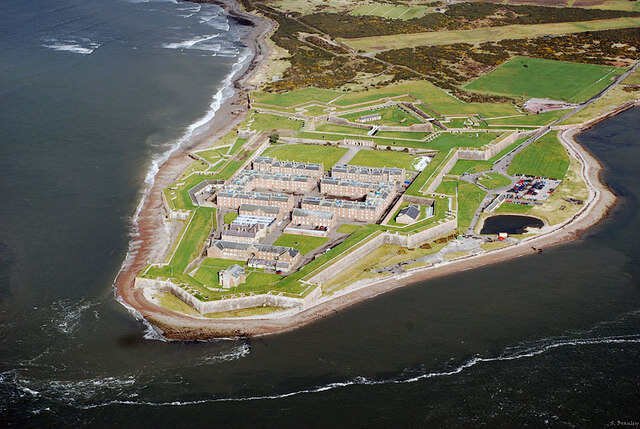
Fort George represents one of the most impressive 18th-century fortifications in Europe, demonstrating the pinnacle of military engineering following the Battle of Culloden. Built between 1748-1769 on the Moray Firth near Inverness, this massive artillery fortress served as the British government’s definitive response to Highland rebellion, creating an impregnable stronghold that continues to house an active military garrison after 250 years of continuous service.
The strategic defensive importance of Fort George stemmed from its commanding position controlling access to the Scottish Highlands and northern sea approaches. Constructed as part of the systematic suppression of Highland culture following Culloden, the fortress was designed to project British military power throughout the region while preventing future Jacobite uprisings through permanent occupation and rapid response capabilities.
The fort’s revolutionary design incorporated the latest European military engineering principles, featuring massive ramparts, sophisticated bastions, and geometric layouts optimized for artillery warfare. The defensive walls stretch for over one mile in circumference, creating a virtually impregnable position that could withstand prolonged siege while accommodating a substantial garrison with complete logistical independence.
Architectural innovations at Fort George included advanced drainage systems, purpose-built barracks, and integrated facilities for everything from ammunition storage to bread baking. The fort represented a self-contained military community designed for permanent occupation, demonstrating how 18th-century military engineers approached comprehensive territorial control and cultural suppression.
The Highlanders’ Museum, housed within the fort, preserves the heritage of Scottish Highland regiments and their service throughout the British Empire. Extensive collections of uniforms, weapons, medals, and personal artifacts illustrate how Highland military traditions were transformed from sources of rebellion into pillars of imperial defence.
Current exhibitions include ‘Seeds of Time: Scottish Gardens 1600 to present day’ and aerial photography displays celebrating Scotland’s landscape heritage. These cultural programs demonstrate how historic military sites can serve broader educational purposes while maintaining their essential character and operational capabilities.
The fort continues to serve as an active military installation, housing the Black Watch (Royal Highland Regiment) and maintaining its role in British Army training and operations. This continuity of military purpose provides unique authenticity, as visitors experience a living fortress rather than a static museum.
An interesting historical fact involves Fort George’s construction costs, which exceeded £200,000 in 18th-century currency, equivalent to tens of millions today. Despite this enormous investment, the fort never faced the Highland uprising it was built to suppress, making it perhaps the most expensive unused fortress in military history.
Frequently Asked Questions About Fort George
What are Fort George opening hours?
April-September: Daily 9:30am-5:30pm (last entry 4:30pm). October-March: Daily 10am-4pm (last entry 3pm). Historic Environment Scotland manages the site with seasonal hour variations.
How much does Fort George cost?
Adult £10, child £6, family tickets available. Historic Environment Scotland Explorer Pass provides excellent value for multiple site visits. Active military personnel may receive discounts.
How long should I spend at Fort George?
Plan 2-3 hours minimum for comprehensive exploration. The massive perimeter walls alone require substantial walking time, and the museum exhibitions deserve detailed attention.
Can you walk around Fort George walls?
Yes, visitors can walk the complete perimeter of the fortifications, experiencing the full scale of this massive defensive system while enjoying spectacular views across the Moray Firth and surrounding Highlands.
Is Fort George suitable for wheelchairs?
Limited accessibility due to historic military architecture. Some areas accessible, but cobbled surfaces and defensive features create barriers. Contact the site for specific accessibility information and assistance.
What’s inside Fort George?
The Highlanders’ Museum, historic barracks, chapel, ammunition stores, and various exhibitions. The fort also houses active military facilities, though public areas provide comprehensive access to historic structures.
Can you see weapons at Fort George?
Yes, extensive collections of Highland regiment weapons, artillery pieces, and military equipment spanning centuries of service. The museum displays authentic weapons alongside historical context and operational information.
Nearby Defence Heritage Sites of Interest
| Site Name | Type | Distance (miles) |
|---|---|---|
| Inverness Castle | 19th-century castle / historic site | 9 |
| Spynie Palace | Episcopal fortified palace / medieval | 10 |
| Cawdor Castle | Medieval tower house | 12 |
| Brodie Castle | 16th-century tower house | 14 |
| Urquhart Castle | Medieval lakeside fortress | 18 |
| Burghead Castle | Medieval coastal castle ruins | 20 |
| RAF Kinloss (former RAF station) | Cold War / military airbase | 22 |
| RAF Lossiemouth Hardened Aircraft Shelters | Cold War–era hardened aircraft shelters | 24 |
| Morayvia Aviation Museum | Military / aviation museum | 25 |
Image credit: Stephen Branley
Share
See on the Map
Contact Info
- 01667 460232
- hs.explorer@hes.scot
- www.historicenvironment.scot/visit-a-place/places/fort-george
- Fort George, Ardersier, Inverness IV2 7TD, Highland, Scotland