
East Midlands Aeropark
Features
Description
East Midlands Aeropark is a premier aviation museum and viewing area at East Midlands Airport, offering visitors a unique dual experience of exploring preserved historic aircraft while watching contemporary commercial aviation operations at one of Britain’s fastest-growing international passenger and cargo airports.
Located in the northwest corner of the East Midlands airport site near Castle Donington, this volunteer-run museum combines static aircraft displays with spectacular live aviation viewing, creating an unparalleled destination for aviation enthusiasts, families, and photographers seeking authentic aerospace heritage experiences.
The strategic defensive importance reflected in the Aeropark’s collection stems from the represented aircraft’s crucial roles in Cold War air defence, nuclear deterrent operations, and maritime patrol missions that protected Britain throughout the post-war era.
The museum preserves examples of aircraft that maintained British air superiority and surveillance capabilities during decades of superpower confrontation, illustrating how military aviation technology evolved from piston-engine bombers to sophisticated jet-powered strategic platforms capable of delivering nuclear weapons or detecting enemy submarines across vast ocean expanses.
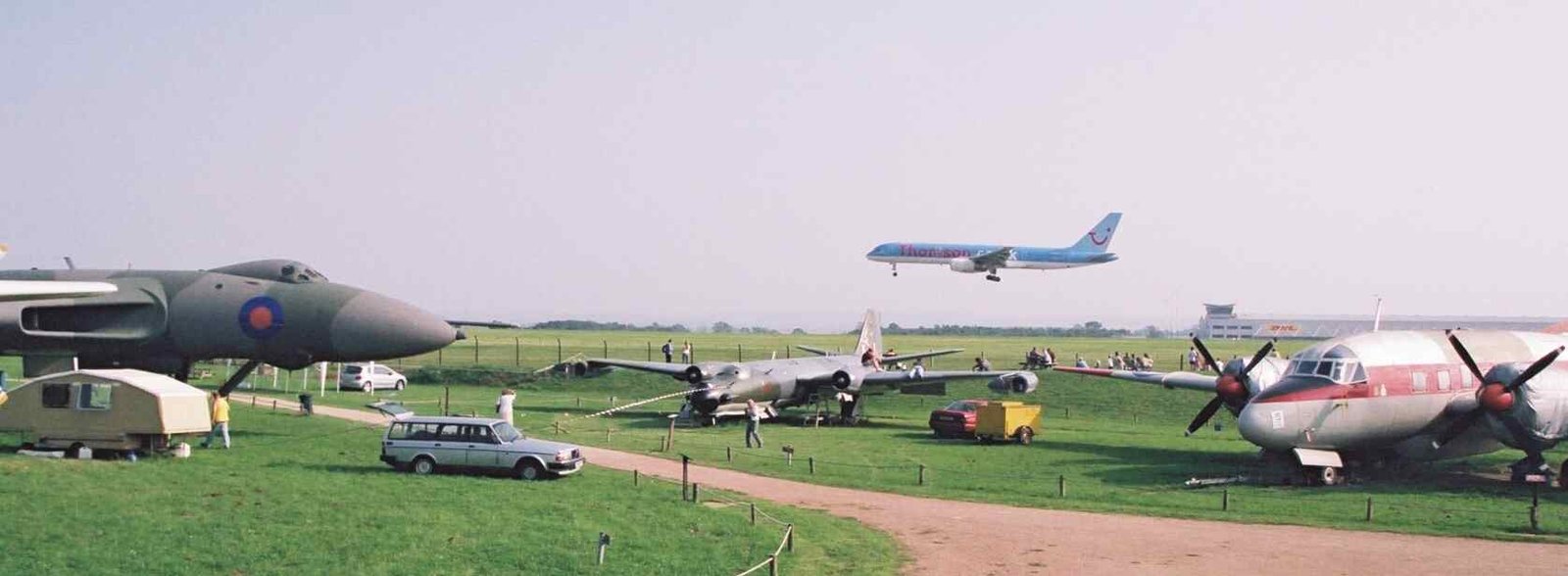
The museum’s centerpiece attractions include the magnificent Avro Vulcan B.2, Britain’s iconic delta-wing strategic bomber that served as the airborne component of the nation’s nuclear deterrent throughout the Cold War. This impressive aircraft represents the pinnacle of British aviation engineering, demonstrating the sophisticated aerodynamics and powerful engines that enabled high-altitude bombing missions or low-level penetration strikes. Visitors can appreciate the Vulcan’s enormous size and elegant lines while understanding its vital role maintaining peace through deterrence during the most dangerous decades of the twentieth century.
The Hawker Siddeley Nimrod R.1, a maritime reconnaissance variant of Britain’s first jet airliner, demonstrates how civilian technology was adapted for military surveillance missions. This specialised aircraft conducted electronic intelligence gathering operations, monitoring Soviet naval activities and communications throughout the Cold War. The Nimrod’s presence illustrates the sophisticated electronic warfare capabilities that complemented Britain’s more visible military forces, providing critical intelligence that informed strategic decision-making at the highest government levels.
The English Electric Lightning supersonic interceptor represents the cutting edge of 1960s fighter technology, capable of intercepting Soviet bombers threatening British airspace at speeds exceeding Mach 2. This remarkable aircraft, with its distinctive stacked engine configuration and dramatic swept wings, embodied the Quick Reaction Alert capability that defended British skies throughout the Cold War.
The collection encompasses numerous other military and civilian aircraft spanning decades of aviation development, from propeller-driven trainers to modern commercial jets retired from airline service. This diversity illustrates the parallel evolution of military and civilian aviation technology, demonstrating how innovations in one sector influenced developments in the other.
The Aeropark has a collection of 28 complete air frames on external display within the park with another 5 aircraft under complete restoration and 4 aircraft sections.
Interactive access to many aircraft allows visitors to explore cockpits, passenger cabins, and cargo holds, providing intimate understanding of aviation history impossible at museums with purely external viewing.
The viewing area provides spectacular perspectives on contemporary airport operations, with arriving and departing aircraft visible throughout the day. Aviation photographers particularly value the combination of historic aircraft foregrounds with active runway backgrounds, creating unique compositional opportunities. The airport’s status as a major cargo hub means interesting freight aircraft supplement passenger operations, providing variety that engages aviation enthusiasts for extended periods.
Visitor facilities include toilet and shop amenities selling aviation souvenirs, hot and cold drinks, and light snacks. The museum operates year-round with free admission, though donations support ongoing preservation work and collection development.
Dedicated volunteers provide knowledgeable guidance, sharing technical information and historical context that brings exhibits alive. Special event days throughout the year feature additional activities, exclusive aircraft access, and themed presentations covering specific aspects of aviation history.
Educational programs cater to school groups, scout organizations, and other youth groups seeking engaging STEM-focused experiences. The combination of historic aircraft and active airport operations demonstrates practical applications of physics, engineering, and technology while inspiring young people to consider aviation careers. Group visits can be arranged throughout the year with advance booking ensuring appropriate volunteer support and maximizing educational value.
An interesting historical fact involves the Aeropark’s evolution from informal aircraft storage area to comprehensive museum. The collection began with a single aircraft in the 1970s, gradually expanding as more retired aircraft became available for preservation. This organic growth reflects the dedication of volunteers who recognized the importance of preserving aviation heritage before historically significant aircraft were scrapped, creating the impressive collection visible today.
Visitor Reviews from the Web
Positive reviews consistently praise the free admission and exceptional value offered by East Midlands Aeropark. Visitors appreciate the impressive collection including the iconic Vulcan bomber and the opportunity to explore aircraft interiors on guided tours.
The dual attraction of historic aircraft combined with live airport viewing receives particular acclaim, with aviation enthusiasts spending hours photographing both preserved and operational aircraft.
Families enjoy the accessible displays and educational value while children find the scale of military aircraft particularly engaging. The knowledgeable volunteer staff receive consistent praise for their passion and expertise. The shop facilities and refreshments add convenience to visits. Many reviewers describe the Aeropark as a hidden gem and excellent day out for aviation enthusiasts and families alike.
Negative aspects mentioned occasionally include weather dependency for outdoor exhibits, with wet conditions making visits less comfortable. Some visitors note that certain aircraft are not always accessible for interior tours depending on volunteer availability and ongoing conservation work.
A few reviews mention the museum’s relatively modest size compared to major national aviation museums, though most acknowledge this is balanced by free admission and the active airport viewing opportunity.
Limited signage approaching the museum from some directions can make initial location challenging for first-time visitors.
The outdoor setting means exhibits show weathering over time, though volunteers work continuously on maintenance and restoration projects with limited resources.
Frequently Asked Questions About East Midlands Aeropark
What are East Midlands Aeropark opening hours?
Open year-round daily during daylight hours. Specific times vary seasonally. Shop and toilet facilities available during volunteer staff hours, typically weekends and school holidays. Check the official website or Facebook page for current opening times and special event dates before visiting.
How much does East Midlands Aeropark cost?
FREE admission for all visitors. Donations welcomed and support ongoing aircraft preservation, conservation work, and collection development. The free entry makes this exceptional value for families and aviation enthusiasts seeking accessible aerospace heritage experiences.
Can you go inside aircraft at East Midlands Aeropark?
Yes, guided tours provide access to interiors of selected larger aircraft including bombers and transport aircraft. Interior access depends on volunteer availability and aircraft condition. Special event days often feature enhanced access opportunities with more aircraft open for exploration.
Is East Midlands Aeropark suitable for families?
Yes, it’s an excellent family destination with impressive aircraft displays, educational value, and the excitement of watching live airport operations. Children particularly enjoy the enormous military aircraft and learning about aviation history through hands-on exploration. Free admission makes it ideal for family days out.
Where can I park at East Midlands Aeropark?
Free parking available on-site adjacent to the museum. The Aeropark is located in the northwest corner of East Midlands Airport site, well signposted from the airport’s main entrance. Easy car access with ample parking space for visitors.
What aircraft can you see at East Midlands Aeropark?
The collection includes Avro Vulcan B.2 strategic bomber, Hawker Siddeley Nimrod R.1 maritime reconnaissance aircraft, English Electric Lightning supersonic interceptor, plus numerous other military and civilian aircraft spanning decades of aviation development from propeller trainers to modern jets.
How long should I spend at East Midlands Aeropark?
Plan 2-3 hours for comprehensive exploration of the aircraft collection and enjoying the airport viewing area. Aviation photographers and enthusiasts often spend longer combining historic aircraft photography with capturing contemporary airport operations. Special event days may extend visit duration with additional activities and exclusive aircraft access.
Nearby Defence Heritage Sites of Interest
| Site Name | Type | Distance (miles) |
|---|---|---|
| Donington le Heath Manor House | 13th-century fortified manor house | 7 |
| Nottingham Castle | Medieval castle with military history museum | 11 |
| Newark Air Museum | Aviation museum with Cold War aircraft | 14 |
| Derby Museum and Art Gallery | Includes military history and regimental exhibits | 15 |
| Ashby de la Zouch Castle | Ruined medieval castle with Civil War history | 16 |
| Elvaston Castle (grounds only) | Historic estate with military connections | 17 |
| Bosworth Battlefield Heritage Centre | Site of 1485 battle with fortification remains | 22 |
| The Royal Lancers & Nottinghamshire Yeomanry Museum | Regimental military museum at Thoresby | 26 |
| Belvoir Castle | Historic fortified stately home | 28 |
| RAF Wymeswold (disused airfield) | WWII and Cold War RAF station (partial remains) | 29 |
Image credit: Buju5000
Share
See on the Map
Contact Info
- 01332 850463
- aeropark@eastmidlandsaeropark.org
- www.eastmidlandsaeropark.org
- Hill Top, Castle Donington, Derby DE74 2PR, England