
Beeston Castle
Features
Description
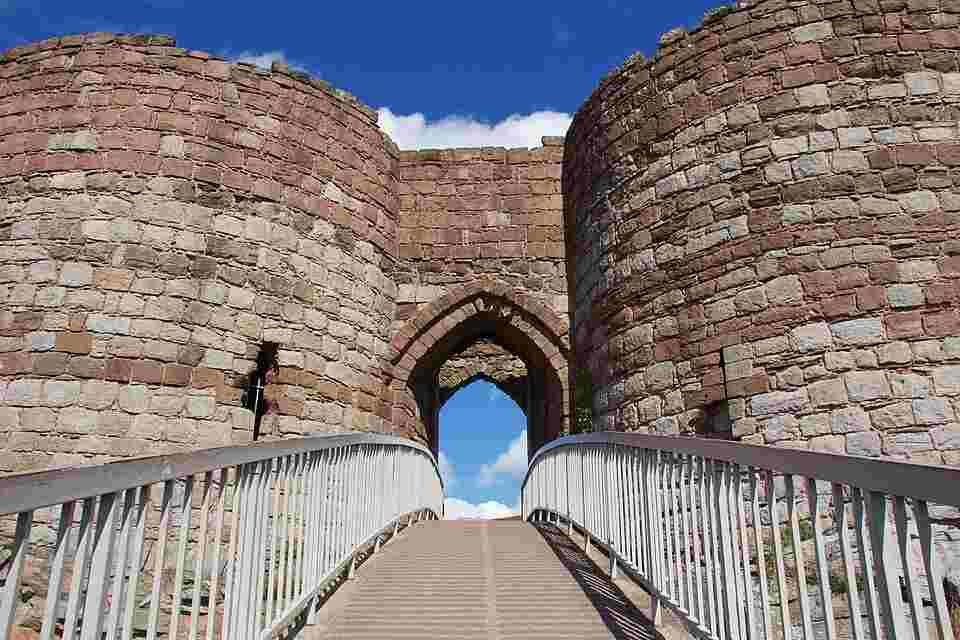
Beeston Castle stands as one of the most dramatically sited medieval castles in England, perched on a rocky sandstone crag 350 feet above the Cheshire Plain with spectacular panoramic views extending across eight counties. Built in the 1220s by Ranulf de Blondeville, 6th Earl of Chester, on his return from the Crusades, this imposing fortress demonstrates crusader-inspired military architecture while incorporating earlier Iron Age defences, creating a unique multi-period defensive complex spanning 4,000 years.
The strategic defensive importance of Beeston Castle stems from its commanding elevated position dominating the Cheshire Plain. The rocky crag provides natural fortification while offering unobstructed views that on clear days stretch from the Pennines to the Welsh mountains, enabling early detection of approaching threats from any direction. This exceptional visibility made Beeston an ideal lookout point and communications hub, controlling movement across the vital corridor between England and Wales.
The castle’s architectural design reflects Earl Ranulf’s experience during the Third Crusade, incorporating sophisticated defensive features observed in Middle Eastern fortifications. The siting of the castle’s outer bailey walls deliberately utilised fortifications remaining from the earlier Iron Age hillfort rampart, demonstrating medieval builders’ pragmatic approach to maximizing natural and artificial defences. This integration of ancient and medieval engineering created formidable concentric defences protecting the inner ward and keep.
Construction utilized the natural topography brilliantly, with the inner ward perched at the summit of the crag accessed via a steep winding path designed to exhaust and expose attackers. The outer bailey encompassed a larger area lower down the hillside, providing space for garrison buildings, stables, and workshops while the massive curtain walls and towers created multiple defensive lines. The famous deep well, plunging 366 feet through solid rock to reach water, ensured the garrison could withstand prolonged sieges.
Royal ownership began in 1237 when Henry III took over Beeston Castle, maintaining it as a strategic stronghold and occasional royal residence throughout the Middle Ages. The castle remained in good repair and military readiness until the 16th century when changing military technology rendered traditional castles obsolete. However, the outbreak of the English Civil War in 1643 thrust Beeston back into military service for one final dramatic chapter.
The English Civil War transformed Beeston into a hotly contested prize due to its strategic position. Initially held by Parliamentarians, a daring Royalist nighttime assault in 1643 captured the supposedly impregnable fortress with just eight men climbing the crag under cover of darkness. This audacious feat demonstrated that even the strongest fortifications could be overcome through stealth and courage, though it also highlighted the castle’s undermanned state.
Parliamentary forces besieged the Royalist garrison throughout 1644-1645, eventually recapturing Beeston after the decisive Battle of Rowton Heath sealed King Charles I’s defeat in the northwest. Following surrender, Parliament ordered the castle slighted in 1646, deliberately demolishing walls and towers to prevent future military use. This destruction created the dramatic ruins that crown the crag today, their broken walls testimony to the castle’s final military engagement.
The surrounding 40-acre woodland park adds significant value to the visitor experience, featuring way-marked trails, a recreated Bronze Age roundhouse demonstrating prehistoric occupation, and diverse wildlife habitats. Educational programs bring 4,000 years of history alive through hands-on activities, archaeological interpretation, and seasonal events that transform the castle into an engaging outdoor classroom.
An interesting historical fact involves the legendary treasure of Richard II, supposedly hidden within Beeston’s grounds before his deposition in 1399. Despite numerous treasure hunts over six centuries, including modern archaeological investigations, no royal treasure has been discovered. This persistent legend adds romance to Beeston’s history while demonstrating how castles become embedded in local folklore and national imagination.
Frequently Asked Questions About Beeston Castle
What are Beeston Castle opening hours?
January-March: Thursday-Monday 10am-4pm. April-September: Daily 10am-6pm. October: Daily 10am-5pm. November-December: Thursday-Monday 10am-4pm. Closed December 24-26. Last admission 30 minutes before closing. Check English Heritage website for current seasonal variations.
How much does Beeston Castle cost?
English Heritage members enjoy free entry. Non-members pay standard admission with adult tickets typically £10-12, children reduced rates, family tickets available. Online booking recommended for guaranteed entry and possible discounts compared to gate prices.
Can you see eight counties from Beeston Castle?
Yes, on clear days the spectacular panoramic views from the castle summit extend across eight counties, from the Pennines to the Welsh mountains. These exceptional views reward the steep climb and demonstrate why this location was chosen for defensive purposes.
How steep is the climb to Beeston Castle?
The climb to the inner ward is steep and challenging, ascending 350 feet up the rocky crag via winding paths. Good footwear essential, and the climb may be difficult for those with mobility issues. However, the outer bailey and woodland walks offer gentler alternatives.
Is Beeston Castle suitable for families?
Yes, it’s an excellent family destination with 40 acres of woodland to explore, Bronze Age roundhouse, interactive history activities, and spectacular views. Children enjoy the adventure of climbing to the castle summit, though supervision required on steep paths and near cliff edges.
Where can I park at Beeston Castle?
Free parking available in the dedicated car park at the castle entrance. Additional overflow parking provided during busy periods. The castle is easily accessible by car, located just off the A49 near Tarporley.
What is the deep well at Beeston Castle?
The famous well descends 366 feet through solid sandstone rock to reach the water table, making it one of the deepest castle wells in England. Originally hand-cut in the 13th century, it ensured water supply during sieges and remains an impressive engineering achievement.
Nearby Defence Heritage Sites of Interest
| Site Name | Type | Distance (miles) |
|---|---|---|
| Peckforton Castle | Medieval castle and fortified manor | 3 |
| Chester Castle | Norman/medieval castle and keep | 9 |
| Cheshire Military Museum (at Chester Castle) | Regimental / military museum | 9 |
| Delamere Forest WWII defences (remains) | World War II local defensive works | 10 |
| Old Pale Iron Age / earthwork fortifications (Beeston Gap area) | Prehistoric hillfort / defensive earthworks | 11 |
| Eaton Hall (historic fortified estate features) | Country house with historic defensive features | 12 |
| RAF Hawarden (former and Cold War activity area) | Cold War / RAF station and air defence site | 18 |
| Avro Heritage Museum (Woodford) | Aviation / aero museum | 22 |
| Imperial War Museum North (Salford Quays) | Military and aviation collections museum | 25 |
| Manchester Museum of Transport (aviation exhibits) | Transport museum with aviation displays | 28 |
image credit:Mike Peel
Share
See on the Map
Contact Info
- 01829 260464
- www.english-heritage.org.uk/visit/places/beeston-castle-and-woodland-park
- Chapel Lane, Beeston, Tarporley, Cheshire CW6 9TX, England