
Hastings Castle
Features
Description
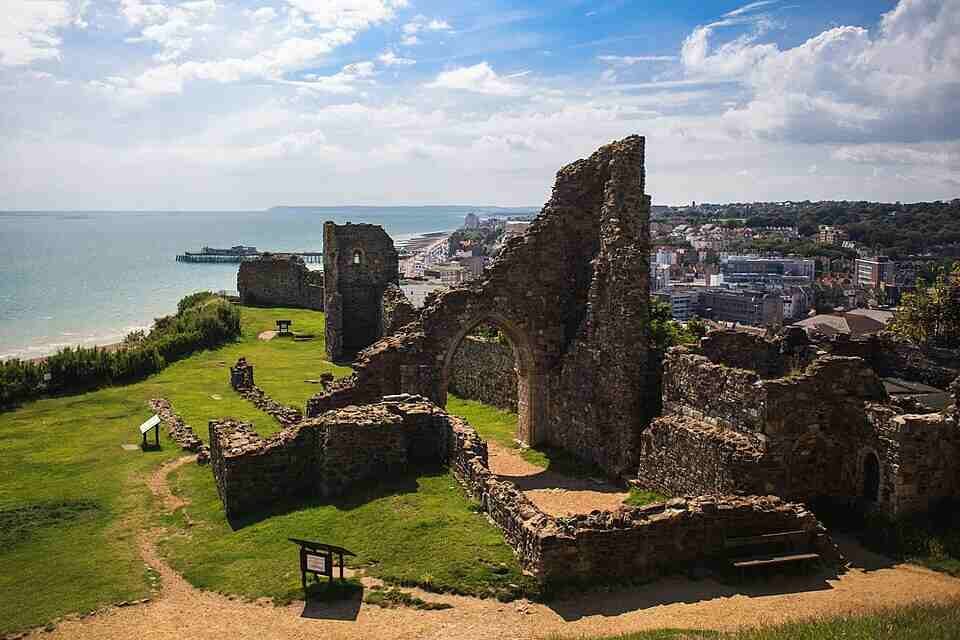
Hastings Castle holds the unique distinction of being Britain’s first Norman castle, built by William the Conqueror immediately after his landing in September 1066. Dramatically positioned on clifftops overlooking the English Channel, this historic fortress played a crucial role in securing William’s beachhead before the famous Battle of Hastings that changed English history forever.
The strategic defensive importance of Hastings Castle lay in its commanding coastal position. Built as a wooden motte-and-bailey fortification near the sea, the castle controlled the vital landing point and secured the Sussex coastline while William prepared for his confrontation with King Harold. The elevated clifftop site provided panoramic views across the Channel, enabling early detection of approaching threats while projecting Norman military power across the region.
Originally constructed using prefabricated wooden components brought from Normandy, Hastings Castle demonstrated innovative military logistics. The rapid construction allowed William to establish a secure base of operations within days of landing, protecting his invasion force while supplies and reinforcements arrived. This tactical advantage proved crucial for the successful Norman conquest.
Medieval development transformed the wooden fortress into an impressive stone castle. By the 12th century, substantial stone walls, towers, and a collegiate church created a formidable stronghold. However, the castle’s clifftop position, while strategically advantageous, created long-term structural challenges as coastal erosion gradually undermined the foundations, causing large sections to collapse into the sea over subsequent centuries.
The castle’s role diminished after the medieval period, though it remained symbolically important. By the 16th century, continued erosion and changing military technology rendered it obsolete. Today, evocative ruins including sections of curtain walls, chapel remains, and dungeon chambers survive, testament to both Norman engineering and the relentless power of coastal erosion.
Modern visitor experiences include the immersive 1066 Story, utilizing audiovisual technology and interactive displays to bring the Norman Conquest alive. The ‘1066 Story in the Siege Tent’ features dramatic siege engines and medieval weaponry, while interpretive exhibitions explain castle construction, daily medieval life, and the pivotal events of 1066.
An interesting historical fact involves the castle’s appearance in the Bayeux Tapestry, where it is depicted being constructed shortly after William’s landing. This makes Hastings Castle one of the few buildings whose construction is documented in this famous medieval artwork, providing unique insights into 11th-century military architecture and construction techniques.
Frequently Asked Questions About Hastings Castle
What are Hastings Castle opening hours?
Easter-October: Daily 11am-5pm. October-Easter: Daily 11am-3:30pm. Closed December 24-26 and January 1. Opening hours may vary during winter months and special events, so check before visiting.
How much does Hastings Castle cost?
Adult admission approximately £6-8, children reduced rates, family tickets available. Combination tickets with other Hastings attractions including Smugglers Adventure offer excellent value for exploring multiple historic sites.
Is Hastings Castle the same as Battle Abbey?
No, they are separate sites. Hastings Castle was William’s first Norman fortress built in September 1066 before the battle. Battle Abbey was constructed by William after his victory, at the actual battlefield location seven miles away.
Can you access Hastings Castle by cliff railway?
Yes, the West Hill Cliff Railway provides scenic access from Hastings town center directly to the castle grounds, offering spectacular views during the ascent while avoiding the steep hill climb.
What remains of Hastings Castle today?
Substantial ruins survive including curtain wall sections, chapel remains, dungeon chambers, and the impressive gatehouse. Coastal erosion has claimed approximately half the original structure, but remaining sections demonstrate Norman architectural skill.
Is Hastings Castle suitable for families?
Yes, it’s an excellent family destination with the interactive 1066 Story experience, siege tent displays, and dramatic clifftop setting. Children enjoy exploring medieval ruins and learning about the Norman Conquest through engaging storytelling.
Where can I park for Hastings Castle?
Limited parking is available on Castle Hill Road near the entrance. Alternative parking available in Hastings town center with access via West Hill Cliff Railway. The cliff railway offers convenient and scenic transportation avoiding steep hill walking.
Nearby Defence Heritage Sites of Interest
| Site Name | Type | Distance (miles) |
|---|---|---|
| Pevensey Castle | Roman/Saxon shore fort and medieval castle | 6 |
| Lewes Castle | Norman/medieval hilltop castle | 9 |
| Rye Castle Museum | Medieval town castle and maritime defences | 10 |
| Winchelsea town defences | Medieval town fortifications and earthworks | 11 |
| Battle Abbey | Fortified abbey site and Norman battlefield | 12 |
| Camber Castle (remains) | Tudor artillery fort (ruined) | 13 |
| Newhaven Fort | 19th/20th-century coastal fortification | 18 |
| Bodiam Castle | 14th-century moated defensive castle | 20 |
| Dungeness coastal defences | 20th-century coastal and wartime defences | 25 |
| Kent Battle of Britain Museum | Aviation / military museum | 28 |
image credit: Kreepin Deth
Share
See on the Map
Contact Info
- 01424 781111
- discoverhastings.co.uk/listing/hastings-castle
- Castle Hill Road, West Hill, Hastings, East Sussex TN34 3AR, England