
Camber Castle
Features
Description
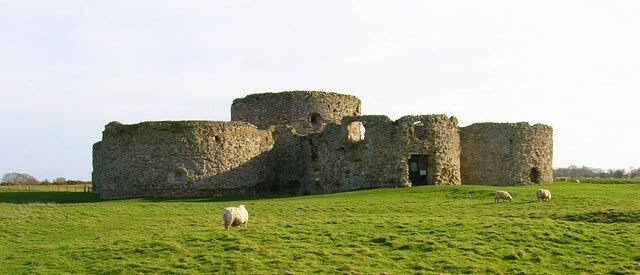
Camber Castle stands as one of the finest examples of Henry VIII’s Device Forts, an innovative 16th-century artillery fortification built to protect England’s vulnerable Sussex coast against French invasion. Constructed between 1539 and 1544 near Rye, this remarkable concentric fortress represents the cutting edge of Tudor military engineering, second in size only to Deal Castle among Henry VIII’s coastal defences, demonstrating how Renaissance military technology transformed English fortification design.
The strategic defensive importance of Camber Castle stemmed from its position guarding the Camber anchorage and entrance to Rye Harbour, one of the most important maritime gateways on England’s south coast. The castle protected the major Cinque Port of Rye and the primary anchorage for shipping in the eastern English Channel. When originally built, the castle stood on the shoreline of an important estuary, allowing direct artillery coverage of approaching hostile vessels while supporting friendly naval forces using this vital harbour.
The castle’s architectural evolution began with a small round artillery tower constructed between 1512 and 1514 by Sir Edward Guldeford, incorporating an even earlier 14th-century circular tower. This initial fortification demonstrated the early Tudor recognition of coastal vulnerability following France’s development of powerful naval capabilities. The modest tower proved adequate for monitoring the harbour but lacked capacity to withstand determined assault or provide comprehensive defensive coverage.
Escalating tensions with France in 1539, following a treaty between France and Spain that isolated England diplomatically, prompted Henry VIII to dramatically rethink his coastal defence strategy. The king commissioned Stefan von Haschenperg, a Moravian military engineer, to redesign and massively expand Camber Castle. Using locally sourced timber, stone, and bricks, along with materials salvaged from dissolved monastic buildings in nearby Winchelsea, construction transformed the modest tower into an imposing concentric artillery fortress.
The ambitious rebuilding proved problematic, with the initial design considered unsatisfactory. Further extensive work from 1542 to 1543, carried out at enormous expense, rectified these problems and created the sophisticated fortress visible today. The final design featured a large concentric artillery fort with the original circular tower at its heart, surrounded by four outer bastions positioned to provide overlapping fields of fire. This innovative layout maximized defensive firepower while creating a symmetrical design that embodied Renaissance architectural principles.
The castle’s operational lifespan proved surprisingly brief despite the massive investment. A receding shoreline caused by coastal changes and land reclamation rendered the fortress increasingly distant from the sea, progressively diminishing its strategic value. By the early 17th century, the harbour had silted up completely, leaving the castle stranded inland and militarily obsolete. The garrison was withdrawn, and the abandoned fortress gradually deteriorated into the picturesque ruin that survives today.
Modern conservation by English Heritage preserves this exceptional Tudor fortification while managing the challenges of its remote marshland location. The castle lies approximately one mile from the nearest parking, accessed via a scenic walk through fields that may contain livestock. This isolation, while challenging for visitors, protects the atmospheric setting and evokes the castle’s original coastal environment before centuries of landscape change.
Guided tours operate on limited schedules, providing exclusive access to the interior and expert interpretation of the castle’s construction, military purpose, and eventual abandonment. The tours reveal the sophisticated gun ports, ammunition storage, garrison quarters, and defensive arrangements that made Device Forts revolutionary in artillery warfare. The remote location and restricted access contribute to an authentic experience rarely found at more accessible heritage sites.
An interesting historical fact involves Camber Castle’s brief but intense construction period. The massive expansion from 1539-1543 consumed extraordinary resources, yet the castle saw minimal military action. Its garrison strength peaked at just 29 men, and it never fired shots in anger against enemy forces. This expensive fortress became obsolete not through military defeat but through environmental change, demonstrating how coastal fortifications depend entirely on unchanging geography for their strategic value.
Frequently Asked Questions About Camber Castle
What are Camber Castle opening hours?
Open first Saturday of each month from August through October for guided tours starting promptly at 2:00pm. No access outside these scheduled tour dates. Booking essential through English Heritage website. Weather conditions may affect opening.
How much does Camber Castle cost?
English Heritage members enjoy free entry. Non-members pay standard admission with tickets bookable online through the English Heritage website. Prices vary, so check current rates when booking your guided tour.
How do I get to Camber Castle?
No road access to the castle. Park at Winchelsea Road car park, Rye (TN31 7EL), then walk approximately one mile through fields with livestock. Wear appropriate footwear for rural terrain. The remote location is part of the castle’s unique character and appeal.
Why is Camber Castle so far from the sea?
When built in the 1540s, Camber Castle stood on the shoreline guarding Rye Harbour. Subsequent centuries of coastal change, land reclamation, and harbor silting caused the sea to recede, leaving the fortress stranded inland and ultimately obsolete.
What is a Device Fort?
Device Forts were Henry VIII’s revolutionary coastal artillery fortifications, designed specifically to mount heavy cannons for defending against naval attack. Camber Castle exemplifies this innovative concentric design optimized for gunpowder artillery rather than traditional medieval defensive architecture.
Can you visit Camber Castle without a tour?
No, the interior is only accessible on scheduled guided tours. The exterior can be viewed from public footpaths year-round, providing impressive views of the Tudor fortification and its isolated marshland setting.
Is Camber Castle suitable for families?
Yes, but consider the one-mile walk through fields and limited facilities. Children interested in Tudor history and military architecture will enjoy the guided tour and remote atmospheric setting. Sturdy footwear essential, and be prepared for exposed coastal weather conditions.
Nearby Defence Heritage Sites of Interest
| Site Name | Type | Distance (miles) |
|---|---|---|
| Rye Castle Museum | Medieval town castle and maritime defences | 2 |
| Winchelsea Town Defences | Medieval town fortifications and earthworks | 3 |
| Rye Harbour Wartime Defences | WWII coastal pillboxes and anti-invasion sites | 4 |
| Battle Abbey | Fortified abbey and 1066 battlefield site | 10 |
| Pevensey Castle | Roman/Saxon shore fort and medieval castle | 17 |
| Kent Battle of Britain Museum | Aviation and military museum | 22 |
| Brenzett Aeronautical Museum | WWII aviation museum and crash recovery exhibits | 23 |
| Newhaven Fort | 19th/20th-century coastal fortification | 24 |
| Bodiam Castle | 14th-century moated defensive castle | 26 |
| Dungeness Coastal Defences | 20th-century coastal and Cold War installations | 28 |
Image credit: Simon Carey
Share
See on the Map
Contact Info
- 01797 227784
- www.english-heritage.org.uk/visit/places/camber-castle
- Harbour Road, Rye, East Sussex TN31 7TD, England