
Dunnottar Castle
Features
Description
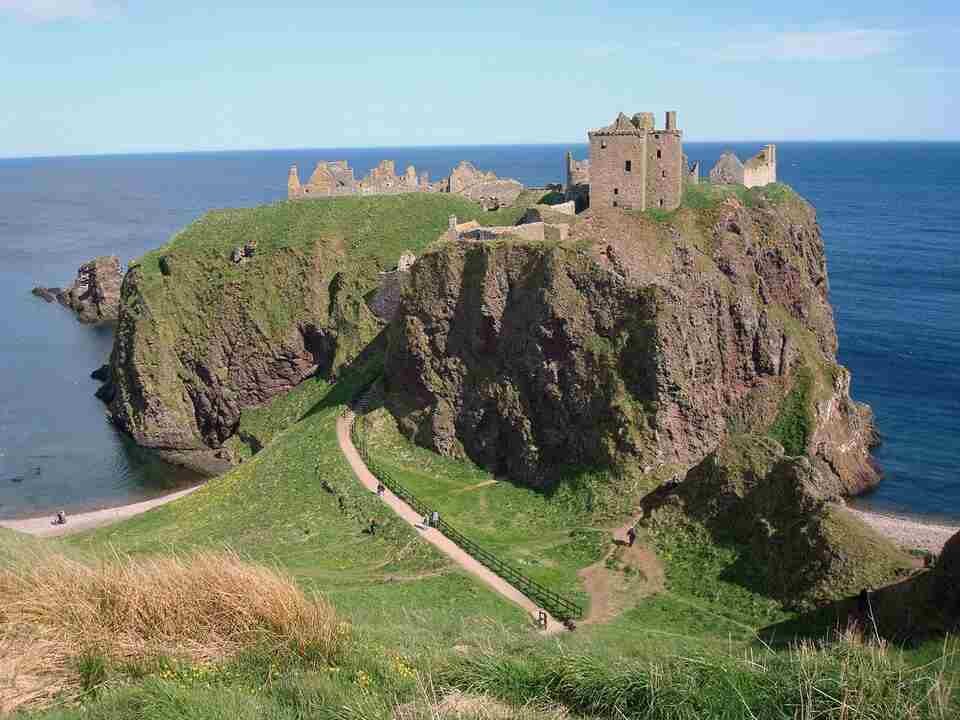
Dunnottar Castle stands as Scotland’s most spectacular clifftop fortress, dramatically perched on a 160-foot rocky outcrop surrounded on three sides by the North Sea. Located near Stonehaven in Aberdeenshire, these evocative ruins represent over 1,000 years of Scottish history and served as an impregnable stronghold for the powerful Earls Marischal, one of Scotland’s most influential noble families.
The strategic defensive importance of Dunnottar Castle cannot be overstated. Its virtually impregnable position on precipitous cliffs made it one of Scotland’s most formidable fortresses, controlling vital sea routes along the northeast coast. The natural defenses required only a narrow landward approach to be fortified, creating an almost unassailable position that withstood numerous sieges throughout its turbulent history.
The castle’s architectural evolution spans centuries, from early Pictish settlements through medieval fortifications to Renaissance palace buildings. The extensive ruins showcase different periods of construction, including the impressive 14th-century keep, the palatial range built by the 5th Earl Marischal, and the elaborate gatehouse that controlled the only access route to the castle complex.
Historical significance extends far beyond military considerations to encompass pivotal moments in Scottish national history. The castle famously hosted William Wallace and Mary Queen of Scots, but its greatest claim to fame involves saving the Honours of Scotland (the Scottish Crown Jewels) from Oliver Cromwell’s army in the 1650s. This heroic act of preservation ensured Scotland’s regalia survived to become the oldest crown jewels in Britain.
The dramatic rescue of the Scottish Crown Jewels involved the castle’s minister, James Grainger, and his wife who smuggled the Honours out during Cromwell’s siege. Hidden in Kinneff Church for years, these precious symbols of Scottish sovereignty were preserved through the courage of Dunnottar’s defenders, making the castle central to Scotland’s constitutional heritage.
Dunnottar’s role during various conflicts illustrates its continued strategic value throughout Scottish history. The castle withstood sieges by Vikings, English armies, and Covenanter forces, demonstrating the effectiveness of its clifftop position and sophisticated defensive arrangements. Each conflict added layers to the castle’s complex history and architectural development.
The surrounding landscape offers spectacular coastal scenery along the Aberdeenshire Coastal Trail, making Dunnottar Castle a photographer’s paradise and nature lover’s destination. The combination of dramatic ruins, crashing waves, and panoramic sea views creates an unforgettable visitor experience that epitomizes Scotland’s rugged coastal beauty.
Modern visitor facilities include scenic picnic areas and refreshment services, while extensive parking accommodates cars, motorhomes, coaches, and cyclists. The castle’s location just 1.6 miles south of Stonehaven and 20 miles from Aberdeen International Airport makes it easily accessible for day trips and tour groups exploring Aberdeenshire.
An interesting historical fact involves the castle’s connection to the Jacobite cause. During the 1715 uprising, the 10th Earl Marischal supported the Jacobite claim, leading to the castle’s eventual abandonment after government forces dismantled its defenses. This dramatic end marked the conclusion of centuries of continuous occupation and military significance.
Frequently Asked Questions About Dunnottar Castle
What are Dunnottar Castle opening hours?
Open daily year-round except Christmas Day, Boxing Day, and 1st-2nd January. Summer (April-September): 9:00am-5:30pm. Winter: 10:00am-varying closing times. Weather-dependent closure may occur during storms.
How much does Dunnottar Castle cost?
Adult admission typically £13, children reduced rates, family tickets available. Prices may vary seasonally, so check the official website for current admission costs and any special offers.
Is Dunnottar Castle suitable for children?
Yes, children love exploring the extensive ruins and dramatic clifftop setting. However, parents should supervise carefully due to steep cliffs and uneven medieval stonework throughout the castle complex.
How long does a Dunnottar Castle visit take?
Plan 2-3 hours minimum for comprehensive exploration. The extensive ruins, spectacular views, and historical significance reward detailed investigation, while photographers may spend considerably longer capturing the dramatic scenery.
Is there parking at Dunnottar Castle?
Yes, free on-site parking available for cars, motorbikes, motorhomes, caravans, and coaches. The car park provides convenient access to the castle entrance and visitor facilities.
Can you walk around Dunnottar Castle cliffs?
Yes, visitors can explore the castle ruins extensively, though care is required near cliff edges. Sturdy footwear recommended due to uneven stone surfaces and outdoor location exposed to coastal weather conditions.
What’s the best time to photograph Dunnottar Castle?
Golden hour (sunrise/sunset) provides optimal lighting for the dramatic clifftop setting. Weather can change quickly, so morning visits often offer clearer conditions for photography and sightseeing.
Nearby Defence Heritage Sites of Interest
| Site Name | Type | Distance (miles) |
|---|---|---|
| Cowie Castle | Medieval coastal castle ruins | 2 |
| Ury House | Historic fortified estate | 3 |
| Fetteresso Castle | Medieval tower house | 4 |
| Muchalls Castle | 17th-century tower house | 6 |
| Slains Castle | Coastal ruined castellated house | 12 |
| Gordon Highlanders Museum | Regimental / military museum | 13 |
| RAF Buchan (former RAF station) | Cold War / military airbase complex | 22 |
| Peterhead WW2 Coastal Defences | World War II coastal fortifications | 24 |
Image credit: Eduardo Unda
Share
See on the Map
Contact Info
- 01569 762173
- info@dunnottarcastle.co.uk
- www.dunnottarcastle.co.uk
- Dunnottar Castle, Stonehaven AB39 2TL, Aberdeenshire, Scotland