
Herstmonceux Castle
Features
Description
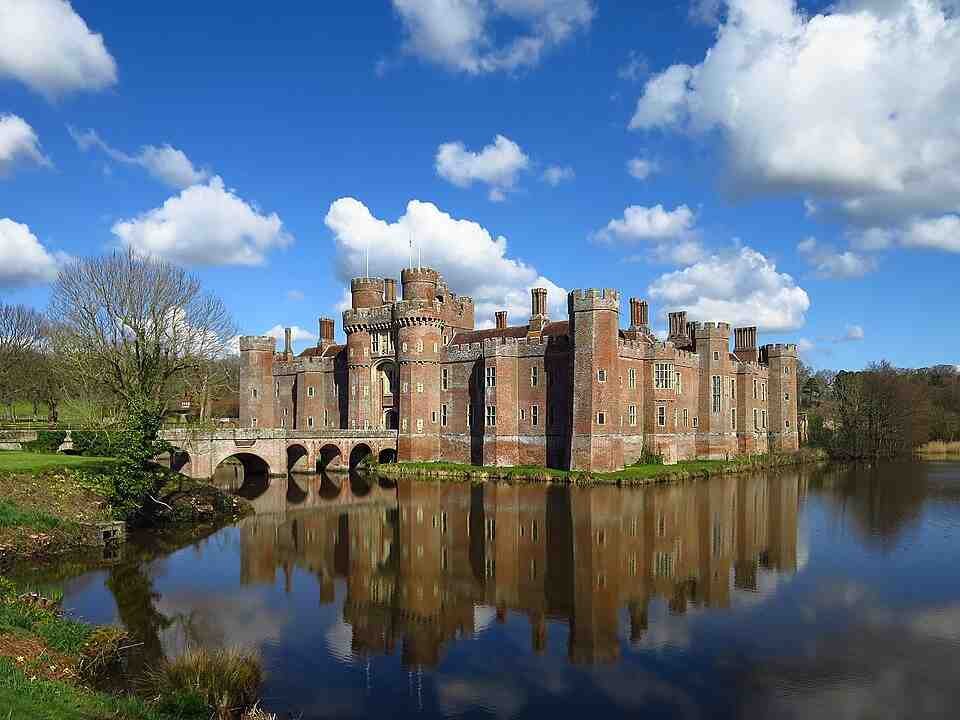
Herstmonceux Castle is one of England’s most magnificent brick-built fortifications, dating from the 15th century and representing a remarkable achievement in Tudor architecture and military design. Located in the picturesque East Sussex countryside near Hailsham, this moated castle has served multiple roles throughout its fascinating 580-year history, from palatial residence to Royal Observatory headquarters, and now operates as both an international study centre and popular tourist attraction showcasing 300 acres of stunning gardens and grounds.
Construction of Herstmonceux Castle began in 1441 under the direction of Sir Roger Fiennes, who served as Treasurer of the Household to King Henry VI. This prestigious position enabled Sir Roger to commission what would become the largest private residence in 15th-century England, at a cost of £3,800—an extraordinary sum for the period.
The castle’s innovative use of red brick was revolutionary for its time, as stone remained the predominant building material for defensive structures in medieval England. The bricks were manufactured locally from Sussex clay and laid by skilled Flemish craftsmen, creating a stunning example of early English brickwork that continues to inspire architects and historians today.
The castle’s design prioritised grandeur and comfort over pure military function, though it retained impressive defensive features including a substantial moat measuring 25 feet wide and encircling the entire structure. The curtain walls enclosed an area twice the size of nearby Bodiam Castle, providing ample space for secondary buildings capable of housing the large household of an important baron. Sir Roger Fiennes was a distinguished veteran of the Hundred Years’ War, having fought alongside Henry V at the Battle of Agincourt in 1415, and his castle reflected both his military experience and his elevated social status at the Tudor court.
The Fiennes family maintained their influential position for over a century until tragedy struck in 1541. Sir Thomas Fiennes, Lord Dacre, was convicted of murder after a poaching expedition on a neighbouring estate resulted in the death of a gamekeeper. King Henry VIII had him executed at Tyburn and temporarily confiscated the Herstmonceux estate.
Queen Elizabeth I later restored the property to the Fiennes family during her reign, and they undertook significant renovations in the late 17th century, adding fashionable reception rooms featuring exquisite wood carvings by the renowned Grinling Gibbons, whose intricate craftsmanship adorned many of England’s finest stately homes.
In the late 18th century financial difficulties beset the new owners, and it was stripped of its valuable materials including bricks, furnishings, and architectural elements. The castle became a romantic ivy-covered ruin throughout the Victorian era, attracting day-trippers from Brighton and Eastbourne who came to admire the picturesque Gothic remains reflected in the tranquil moat.
Colonel Claude Lowther purchased the ruined castle in 1910 and embarked on an ambitious restoration project, later completed by Sir Paul Latham in 1933 under the guidance of architect Walter Godfrey.
One of the most fascinating chapters in Herstmonceux Castle’s history began in 1946 when the Admiralty purchased the estate to relocate the Royal Greenwich Observatory from London. Founded by King Charles II at Greenwich in 1675, the observatory had served as Britain’s premier astronomical facility for nearly three centuries. However, increasing light pollution and atmospheric contamination from London’s urban expansion severely compromised observing conditions, necessitating a move to the clearer, darker skies of rural Sussex. The relocation took over a decade to complete, with the observatory becoming fully operational at Herstmonceux by 1957.
The castle’s 300-acre estate encompasses eight curated themed gardens, each offering distinctive character and seasonal beauty. Beyond the formal gardens, visitors can explore extensive woodland walks featuring ancient Spanish chestnut trees estimated at 350 years old, their massive gnarled trunks testament to centuries of growth.
The Castle Café and Terrace, operated by Geo’s Chestnuts, serves excellent coffee, homemade cakes, light lunches, and afternoon refreshments, with the option to enjoy wine or beer while admiring spectacular views of the castle’s imposing red-brick façade reflected in the surrounding moat.
Free History Walking Tours led by knowledgeable guides provide fascinating insights into the castle’s architecture, the noble families who lived there, connections to local smuggling gangs, secret passages, and persistent ghost stories including the mysterious body once discovered in an underground cellar. The estate regularly hosts special events including medieval festivals, falconry displays, historical reenactments featuring archers and knights, stargazing evenings, wedding ceremonies, and corporate functions.
Nearby Defence Heritage Sites of Interest
| Site Name | Type | Distance (miles) |
|---|---|---|
| Pevensey Castle | Roman/Saxon shore fort and medieval castle | 6 |
| Michelham Priory | Moated medieval priory with WWII exhibits | 7 |
| Battle Abbey | Fortified abbey and 1066 battlefield site | 10 |
| Eastbourne Redoubt Fortress | Napoleonic-era coastal fortification and museum | 11 |
| Rye Castle Museum (Ypres Tower) | Medieval town castle and maritime defences | 15 |
| Camber Castle | Tudor artillery fort (ruined) | 16 |
| Rye Harbour Wartime Defences | WWII coastal pillboxes and anti-invasion sites | 17 |
| Winchelsea Town Defences | Medieval town fortifications and earthworks | 18 |
| Newhaven Fort | 19th/20th-century coastal fortification | 20 |
| Kent Battle of Britain Museum | Aviation and military museum | 29 |
Image credit: Michael Coppins