
Goodrich Castle
Features
Description
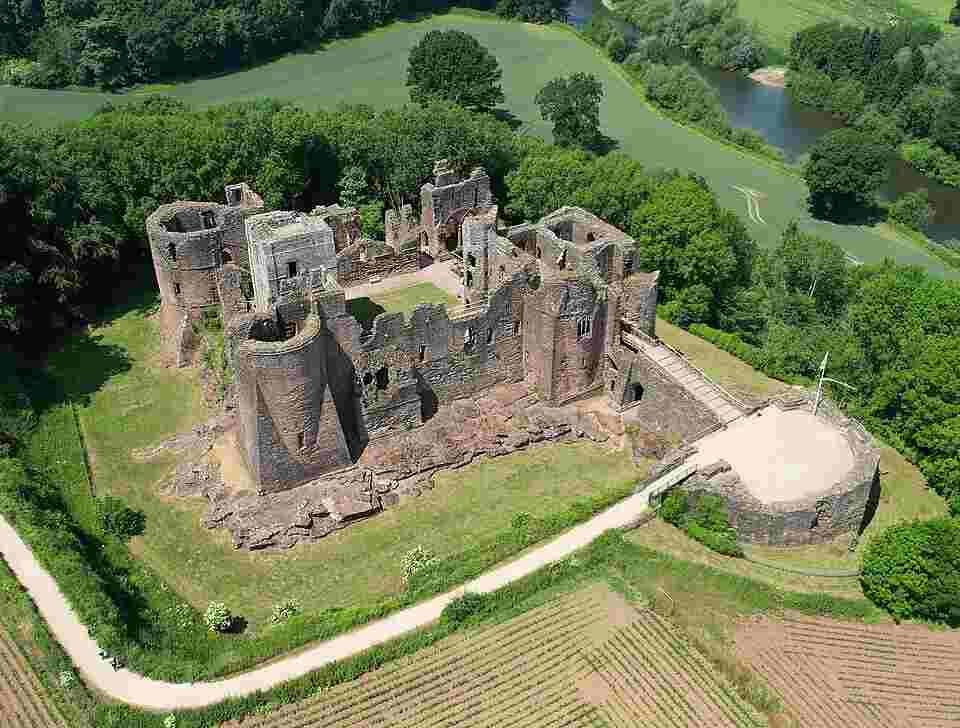
Goodrich Castle is one of the finest and best-preserved of all English medieval fortresses, majestically positioned in open countryside above the River Wye on the Herefordshire-Gloucestershire border. This red sandstone stronghold demonstrates six centuries of continuous architectural development, from Norman origins through medieval expansion to its dramatic destruction during the English Civil War, creating the picturesque ruin that captivates visitors today.
The strategic defensive importance of Goodrich Castle stemmed from its commanding position and controlling vital routes between England and Wales. The castle’s hilltop site had been used as a defensive position since Iron Age times, with archaeological evidence revealing Roman activity before Anglo-Saxon and Norman fortifications. This long defensive history demonstrates the enduring strategic value of the location.
The castle’s architectural evolution began around 1101 when Godric Mappestone established the original fortification, giving the castle its name. The impressive square keep, built of distinctive local red sandstone, was added in the mid-12th century and remains the castle’s most recognizable feature. Successive owners, particularly William de Valence in the 13th century, transformed Goodrich into a sophisticated concentric fortress with massive curtain walls, corner towers, and an elaborate barbican entrance.
The 13th-century expansion created one of Britain’s most advanced medieval castles, incorporating the latest defensive innovations from continental fortress design. The concentric walls provided multiple defensive lines, while the massive corner towers housed accommodation, storage, and defensive positions. The gatehouse and barbican formed a complex entrance arrangement designed to channel attackers into killing zones where defenders could rain down missiles from multiple directions.
The English Civil War marked Goodrich Castle’s most dramatic military engagement and ultimate downfall. In 1646, by which time only Goodrich Castle in Herefordshire remained in Royalist hands, Sir Henry Lingen commanded a garrison of 200 men defending against Parliamentary forces led by Colonel John Birch. The resulting four-month siege became legendary for its intensity and the deployment of ‘Roaring Meg,’ a massive mortar that fired 200-pound projectiles into the castle.
Roaring Meg, the only surviving mortar from the English Civil War, now stands proudly in the castle courtyard as a testament to artillery’s devastating effectiveness against medieval fortifications. This enormous siege weapon ultimately breached Goodrich’s defences, forcing surrender and leading Parliament to order the castle’s slighting to prevent future military use. The partial demolition created the romantic ruin that inspired 18th and 19th-century poets and artists.
The castle’s post-siege history as a picturesque ruin attracted Romantic era visitors, including William Wordsworth whose 1798 poem ‘We Are Seven‘ was inspired by events at Goodrich. This literary connection transformed the castle from military ruin into cultural landmark, establishing its reputation as one of Britain’s most atmospheric historic sites.
Modern visitor facilities include comprehensive audio tours recounting the infamous siege, interactive family activities, and a popular tearoom serving locally-sourced food including homemade soup, ploughman’s lunches, cream teas, and cakes. The extensive ruins reward exploration, with opportunities to climb battlements for breathtaking Wye Valley views and discover hidden chambers throughout the complex.
An interesting historical fact involves the castle’s alternative name for its Great Keep – the ‘Macbeth Tower’ – derived from legends of an Irish chieftain who supposedly inhabited the castle. While historically dubious, this romantic legend adds to the castle’s atmospheric appeal and demonstrates how folklore becomes intertwined with authentic medieval history.
Frequently Asked Questions About Goodrich Castle
What are Goodrich Castle opening hours?
March 24-October 31: daily 10am-5pm (until 6pm June-August). November 1-February 28: Thursday-Monday 10am-4pm. March 1-23: daily 10am-5pm. Closed December 24-26 and January 1. Last admission 30 minutes before closing.
How much does Goodrich Castle cost?
English Heritage members enjoy free entry. Non-members pay standard admission with online booking until midnight before visit providing discounts. Adult tickets typically £7-9, children reduced rates, family tickets available. Full price applies for gate purchases.
What is Roaring Meg at Goodrich Castle?
Roaring Meg is the only surviving mortar from the English Civil War, a massive siege weapon that fired 200-pound projectiles. This famous artillery piece brought down Goodrich Castle’s defences in 1646 and now stands in the courtyard.
Can you climb Goodrich Castle towers?
Yes, visitors can climb the battlements for breathtaking views across the Wye Valley and surrounding countryside. The extensive ruins allow exploration of towers, chambers, and defensive walls throughout the castle complex.
Is Goodrich Castle suitable for families?
Yes, it’s an excellent family destination with interactive activities, audio tours, extensive grounds for exploration, and action-packed experiences. The tearoom provides refreshments, while family events during holidays add educational entertainment for all ages.
Where can I park at Goodrich Castle?
Free parking available on-site for English Heritage members. Limited parking at the castle entrance, with additional parking available in Goodrich village approximately 500 meters away. The approach road is narrow with limited passing places.
How long should I spend at Goodrich Castle?
Plan 2-3 hours for comprehensive exploration. The well-preserved ruins, spectacular views, fascinating Civil War history, and audio tour experience reward detailed investigation. Family activities may extend visit duration during peak seasons.
Nearby Defence Heritage Sites of Interest
| Site Name | Type | Distance (miles) |
|---|---|---|
| Monmouth Castle | Medieval riverine castle | 6 |
| Tintern Abbey (defensive earthworks) | Monastic site with defensive features | 6 |
| Caldicot Castle | Norman castle and fortified manor | 8 |
| Skenfrith Castle | Norman motte-and-bailey / fortified site | 10 |
| White Castle | Medieval border castle | 11 |
| Raglan Castle | Late medieval/early modern fortress | 12 |
| Chepstow Castle | Norman riverside artillery fort | 13 |
| Grosmont Castle | Medieval border castle | 15 |
| Soldiers of Gloucestershire Museum | Regimental / military museum | 20 |
| Gloucester WW2 and coastal defences (remains) | World War II local defensive works | 24 |
Image credit: Scribwik
Share
See on the Map
Contact Info
- 01600 890538
- www.english-heritage.org.uk/visit/places/goodrich-castle
- Castle Lane, Goodrich, Ross-on-Wye, Herefordshire HR9 6HY, England